

-
1 complete function system
English-russian dictionary of physics > complete function system
-
2 system
1) система; комплекс2) совокупность•- absolutely consistent system - absolutely direct indecomposable system - absolutely free system - absolutely irreducible system - absolutely isolated system - allowable coordinate system - almost linear system - ample linear system - artificial feel system - automatic block system - automatic deicing system - binary relational system - binary-coded decimal system - block tooling system - Cartesian coordinate system - completely controllable system - completely ergodic system - completely hyperbolic system - completely identifiable system - completely integrable system - completely irreducible system - completely regular system - completely stable system - completely stratified system - complex number system - conical coordinate system - derivational formal system - differential equation system - differential selsyn system - digital counting system - digital transmission system - elliptic coordinate system - elliptic cylindrical coordinate system - externally inconsistent system - finite state system - finitely axiomatizable system - finitely presented system - fully characteristic quotient system - fundamental system of solutions - hydraulic lift system - integrated switching system - isomorphically embedded system - kernel normal system - linearly dependent system - linearly independent system - live hydraulic system - locking protection system - meteor-burst communication system - modular programming system - parabolic cylindrical coordinate system - permanent four-wheel drive system - pure independent system - radio telephone system - reactor protection system - real number system - receiver-amplifier crioelectric system - remote-cylinder hydraulic system - semantically consistent system - simply consistent system - simply incomplete system - simply ordered system - spherical coordinate system - strongly multiplicative system - structurally stable system - sufficiently general coordinate system - system of frequency curves - system of rational numbers - time multiplex system - time-division multiplex system - uniformly complete system - univalent system of notation - universal system of notation - weakly closed system - weighted number system -
3 function
1) функция, действие || функционировать; действовать- essential functions - routine function - safety-related functions2) функциональное назначение; роль- circuit function - intrinsic function - metering function - primary function - robot function - planning function - service function - support function4) функциональный узел ( машины)5) матем. функциональная зависимость, функция- absolutely additive function - absolutely bounded function - absolutely continuous function - absolutely integrable function - absolutely monotone function - absolutely summable function - absolutely symmetric function - almost complex function - almost continuous function - almost convex function - almost everywhere defined function - almost everywhere finite function - almost invariant function - almost periodic function - almost recursive function - almost separably-valued function - almost separating function - almost universal function - analytically independent function - analytically representable function - approximately differentiable function - asymptotically differentiable function - asymptotically finite function - asymptotically uniformly optimal function - bounded below function - cellwise continuous function - circumferentially mean p-valent function - comparison function - complementary error function - complete analytic function - completely additive function - completely computable function - completely monotone function - completely multiplicative function - completely productive function - completely subadditive function - completely symmetrical function - completely undefined function - complex hyperbolic function - conditional risk function - countably multiplicative function - countably valued function - covariant function - cumulative distribution function - cumulative frequency function - deficiency function - double limit function - doubly periodic function - doubly recursive function - effectively computable function - effectively constant function - effectively decidable function - effectively variable function - elementarily symmetric function - entire function of maximum type - entire function of mean type - entire function of potential type - entire function of zero type - entire rational function - essentially increasing function - essentially integrable function - essentially real function - essentially smooth function - everywhere differentiable function - everywhere smooth function - expansible function - explicitly definable function - exponentially convex function - exponentially decreasing function - exponentially increasing function - exponentially multiplicative function - exponentially vanishing function - finitely mean valent function - finitely measurable function - function of appropriate behavior - function of bounded characteristic - function of bounded type - function of bounded variation - function of complex variable - function of exponential type - function of finite genus - function of finite variation - function of fractional order - function of infinite type - function of integral order - function of maximal type - function of minimal type - function of mixed variables - function of normal type - function of number theory - function of one variable - function of rapid descent - function of rapid growth - function of real variable - general universal function - geometric carrier function - implicitly definable function - incomplete dibeta function - incomplete gamma function - incomplete tribeta function - incompletely defined function - inductively defined function - inductively integrable function - infinitely divisible function - infinitely many-valued function - integral logarithmic function - inverse trigonometric function - inverted beta function - iterative function - joint correlation function - joint density function - linearly separable function - locally bounded function - locally constant function - locally holomorphic function - locally homogeneous function - locally integrable function - locally negligible function - locally regular function - locally summable function - logarithmic generating function - logarithmic integral function - logarithmically infinite function - logarithmically plurisubharmonic function - logarithmically subharmonic function - lower semicontinuous function - monotone non-decreasing function - monotone non-increasing function - multiply periodic function - multiply recursive function - negative definite function - negative infinite function - nontangentially bounded function - normalized function - normed function - nowhere continuous function - nowhere differentiable function - nowhere monotonic function - n-times differentiable function - n-tuply periodic function - numeralwise expressible function - numeralwise representable function - numerical function - numerically valued function - oblate spheroidal function - operating characteristic function - optimal policy function - parametrically definable function - partially symmetric function - piecewise constant function - piecewise continuously differentiable function - piecewise linear function - piecewise monotonic function - piecewise polynomial function - piecewise quadratic function - piecewise regular function - piecewise smooth function - pointwise approximated function - positive homogeneous function - positive infinite function - positive monotone function - positive monotonic function - positive semidefinite function - potentially calculable function - potentially recursive function - power series function - probability generating function - quadratically summable function - rapidly damped function - rapidly decreasing function - rapidly oscillatory function - recursively continuous function - recursively convergent function - recursively defined function - recursively differentiable function - recursively divergent function - recursively extensible function - relative distribution function - relative frequency function - representing function - reproducing kernel function - residual function - residue function - scalarwise integrable function - scalarwise measurable function - sectionally smooth function - simply periodic function - singly recursive function - slowly increasing function - slowly oscillating function - slowly varying function - smoothly varying function - solid spherical harmonic function - solid zonal harmonic function - steadily increasing function - stopped random function - strictly convex function - strictly decreasing function - strictly increasing function - strictly integrable function - strictly monotone function - strongly differentiable function - strongly holomorphic function - strongly integrable function - strongly measurable function - strongly plurisubharmonic function - totally additive function - totally continuous function - totally measurable function - totally multiplicative function - totally positive function - triangular function - uniformly best decision function - uniformly bounded function - uniformly definable function - uniformly differentiable function - uniformly homotopic function - uniformly integrable function - uniformly limited function - uniformly measurable function - uniformly smooth function - unit step function - unitary divisor function - upper measurable function - upper semicontinuous function - weakly analytic function - weakly continuous function - weakly differentiable function - weakly holomorphic function - weakly measurable function - weakly singular function - weighted random functiondomain of a function — область определения функции, область изменения независимой переменной
-
4 system
1) система || системный3) вчт операционная система; программа-супервизор5) вчт большая программа6) метод; способ; алгоритм•system halted — "система остановлена" ( экранное сообщение об остановке компьютера при наличии серьёзной ошибки)
- CPsystem- H-system- h-system- hydrogen-air/lead battery hybrid system- Ksystem- Lsystem- L*a*b* system- master/slave computer system- p-system- y-system- Δ-system -
5 system
1) система || системный2) система; установка; устройство; комплекс3) программа•- adaptive control system
- address selection system
- addressing system
- advice-giving system
- AI planning system
- AI system
- analog computing system
- analog-digital computing system
- analysis information system
- application system
- arabic number system
- arithmetic system
- assembly system
- asymmetrical system
- atomic system
- attached processor system
- audio system
- authoring system
- automated office system
- automatic block system
- automatic checkout system
- automatic control system
- automatic search system
- automatic test system
- automatically programmed system
- automatically taught system
- autoprogrammable system
- axiomatic system
- backup system
- bad system
- bang-bang system
- base-2 system
- basic system
- batch-processing system
- binary system
- binary-coded decimal system
- binary-number system
- biquinary system
- bit-mapped system
- bit-slice system
- black-board expert system
- block parity system
- buddy system
- business system
- bus-oriented system
- bussed system
- CAD system
- call-reply system
- carrier system
- cause-controlled system
- character recognition system
- character-reading system
- chargeback system
- check sum error-detecting system
- chip-layout system
- clock system
- closed loop system
- closed system
- co-authoring system
- code recognition system
- code system
- coded-decimal system
- code-dependent system
- code-insensitive system
- code-sensitive system
- code-transparent system
- coding system
- coincident selection system
- cold system
- color-coded system
- command system
- common-bus system
- communication data system
- communications-oriented system
- complete articulated system
- computer system
- computer-aided design system
- computer-aided system
- computer-based system
- computer-based weapon system
- computerized system
- computing system
- concatenated coding system
- concealment system
- conservative system
- contention system
- continuous presence system
- control system
- controlled system
- controlling system
- coordinate system
- cordonnier system
- costrained vision system
- cross system
- crossbar switch system
- data acquisition system
- data collection system
- data exchange system
- data flow system
- data gethering system
- data handling system
- data management system
- data preparation system
- data processing system
- data reduction system
- data retrieval system
- data storage system
- data system
- data transmission system
- database management system
- database support system
- data-managed system
- decimal number system
- decimal system
- decimal numeration system
- decision support system
- decision-aided system
- decision-making system
- decision-support system
- decision-taking system
- decoding selection system
- decomposable system
- dedicated system
- degenerate system
- design library support system
- design-automation system
- design-verification system
- development support system
- development system
- digital communication system
- digital computing system
- direct-current system
- directly coupled system
- discrete system
- discrete-continuous system
- disk operating system
- display system
- distributed database management system
- distributed function system
- distributed intelligence system
- distributed parameter system
- distributed system
- distribution system
- double intermediate tape system
- down system
- drafting system
- dual system
- dual-computer system
- dual-processor system
- duodecimal number system
- duodecimal system
- duotricenary number system
- duotricenary system
- duplexed computer system
- duplex computer system
- dyadic number system
- dyadic system
- dynamic mapping system
- dynamic scene system
- dynamic support system
- electronic data processing system
- electronic sorting system
- encoding system
- equipment adapted data system
- erasing system
- error-controlled system
- error-correcting system
- error-detecting system
- executive file-control system
- executive system
- expert control system
- expert support system
- expert system
- expert-planning system
- externally pulsed system
- fail-safe system
- fail-soft system
- fan-out system
- fault-tolerant system
- feasible system
- federated system
- feed system
- feedback system
- feedforward control system
- fiche retrieval system
- file control system
- file system
- fixed-lenght record system
- fixed-point system
- fixed-radix numeration system
- floating-point system
- fluid transport system
- follow-up system
- forgiving system
- front-end system
- fuzzy expert system
- generic expert system
- geographically distributed system
- goal-seeking system
- good system
- graceful degradation system
- graphic data system
- graphics display system
- graphics system
- help system
- heterogeneous system
- hexadecimal number system
- hexadecimal system - host system
- hostless system
- host-satellite system
- human visual system
- hunting system
- hypermedia system
- imaging system
- incremental system
- independent system
- indirectly coupled system
- information storage and retrieval system
- information retrieval system
- information handling system
- information management system
- information processing system
- information system
- information-feedback system
- in-plant system
- input/output control system
- instruction system
- instrumentation management system
- integrated system
- intelligence system
- interactive control system
- interactive system
- intercommunicating system
- interlock system
- internal number system
- internal system
- Internet-enabled system
- interrupt system
- isolated system
- kernel system
- key-to-disk/tape system
- knowledge base management system
- knowledge system
- knowledge-based system
- large-scale computing system
- laser communication system
- layered control system - lexicon-driven system
- library reference system
- local-network system
- long-haul system
- lumped-parameter system
- machine tool control system
- machine-limited system
- machine-oriented programming system
- macroinstruction system
- macro system
- magnetic memory system
- magnetic recording system
- magnetic tape plotting system
- mail message system
- mail system
- mailbox system
- management information system
- man-machine system
- mapping system
- map-reading system
- mass memory system
- mass storage system
- master/slave system
- matrix memory system
- memory driver system
- memory system
- message handling system
- message system
- microcomputer system
- microfilm printing system
- midsplit system
- MIMO system
- mixed-base numbering system
- mixed-base number system
- mixed-radix numeration system
- model-based expert system
- modular system
- monitoring system
- monitor system
- mosaic system - multicomputer system
- multidimensional system
- multifrequency system
- multilevel storage system
- multiloop system
- multimaster communication system
- multimicroprocessor system
- multiple computation system
- multiple-bus system
- multiple-coincident magnetic storage system
- multiple-output control system
- multiplex system
- multiport system
- multiprocessing system
- multiprocessor system
- multiprogramming computer system
- multiprogramming system
- multisite system
- multispeaker system
- multistable system
- multitasking operating system
- multiterminal system
- multiuser computer system
- multiuser system
- multiuser operating system
- multivariable system
- multivariate system
- negative-base number representation system
- negative-base number system
- network operating system
- node-replicated system
- noncomputerized system
- nonconsistently based number system
- nondegenerate system
- number representation system
- numbering system
- number system
- numeral system
- numeration system
- numerical system
- octal number system
- octal system
- office automation system
- off-line system
- on-demand system
- one-level storage system
- one-loop system
- one-over-one address system
- on-line system
- open-ended system
- open system
- open-loop system
- operating system
- operational system
- optical memory system
- overdetermined system
- overload-hold system
- page-on-demand system
- panelboard system
- paper-tape system
- parameter-driven expert system
- pattern recognition system
- peek-a-boo system
- peripheral system
- pipeline system
- polled system
- polymorphic system
- polyphase system
- portable system
- positional representation system
- Post-production system
- priority scheduling system
- priority system
- procedural expert system
- process control system
- processor-sharing system
- production control system
- production system
- program system
- programming system
- protection system
- pulse system
- pulse-or-no-pulse system
- pulse-signal system
- punch card computer system
- pure-binary numeration system
- purposeful system
- quadruplex system
- question-answering system
- queueing system
- queue system
- radix numbering system
- radix number system
- reactive system
- reading system
- real-time expert system
- real-time operating system
- real-time system
- reasoning system
- recognition system
- recording system
- recovery system
- reduntant number system
- reduntant system
- reflected binary number system
- reflected binary system
- refreshment system
- remote-access system
- replicating system
- representation system
- request-repeat system
- rerecording system
- residue number system
- residue system
- resource-sharing system
- restorable system
- retrieval system
- retrieval-only system - robotic system
- robot system
- rule-based expert system
- rule-based system
- scalable system
- selection system
- self-adapting system
- self-adjusting system
- self-aligning system
- self-balancing system
- self-check system
- self-contained system
- self-correcting system
- self-descriptive system
- self-learning system
- self-organizing system
- self-sustained oscillation system
- self-test system
- sensor-based system
- sequential scheduling system
- sexadecimal number system
- sexadecimal system
- shared-files system
- shell expert system
- silicon-development system
- simplex system
- single-drive system
- single-inheritance system
- single-phase clock system
- single-site system
- single-user computer system
- SISO system
- skeletal expert system
- slave system
- soft-sectored disk system
- software system
- sound system
- source code control system
- source-destination system
- space-division system
- stabilizing system
- stable system
- stand-alone system
- start-stop system
- state-determined system
- stepped start-stop system
- stereo system
- stochastically disturbed system
- storage system
- stripped-down expert system
- subsplit system
- supervisor control system
- switching system
- symbolic assembly system
- syntactical system
- system explanation system
- system of logic
- system of notation
- system with delay
- system with time lag
- tabulating system
- tape data processing system
- tape drive system
- tape handling system
- tape operating system
- tape plotting system
- tape resident system
- tape-oriented system
- target system
- taught system
- telecommunictions system
- telecontrol system
- terminal system
- ternary number system
- ternary system
- test system
- testbed system
- text-to-speech system
- time-division system
- time-pattern control system
- time-shared system
- time-shared-bus system
- time-sharing system
- timing system
- total system
- translating system
- translation system
- translator writing system
- transmitting system
- tree-structured system
- trusted computer system
- two-failure mode system
- two-level return system
- two-level system
- two-phase clock system
- ultrastable system
- Unified system
- uninterruptible power system
- uniprocessor system
- unrestorable system
- unstable system
- up system
- variable-lenght record system
- virtual system
- virtual-memory operating system
- vision system
- visual system
- voice/audio processing system
- voice-response system
- volunteer system
- weighted number system
- weighted system
- writing system
- xerox copy system
- zero-one systemEnglish-Russian dictionary of computer science and programming > system
-
6 parallel UPS system
параллельная система ИБП
-
[Интент]Parallel Operation: The system shall have the option to install up to four (4) UPSs in parallel configuration for redundancy or capacity.
1. The parallel UPS system shall be of the same design, voltage, and frequency. UPS modules of different size ratings shall be permitted to be paralleled together for purposes of increased capacity or UPS module redundancy. The UPSs in the parallel configuration shall not be required to have the same load capacity rating.
2. Parallel Capacity: With N+0 system-level redundancy, up to 2MW of load can be supported by the system.
3. Parallel Redundancy: With N+1 system-level redundancy, up to 1.5MW of load can be supported by the system, and only the UPS being replaced must be isolated from the source (bypass operation is not required for the entire system during the UPS replacement procedure).
4. Output control: A load sharing circuit shall be incorporated into the parallel control circuits to ensure that under no-load conditions, no circulating current exists between modules. This feature also allows each UPS to share equal amounts of the total critical load bus. The output voltage, output frequency, output phase angle, and output impedance of each module shall operate in uniformity to ensure correct load sharing. This control function shall not require any additional footprint and shall be an integral function of each UPS. The static bypass switches shall be connected in parallel.
5. Parallel System Controls: To avoid single points of failure, the UPS system shall have no single dedicated control system designed to control the operation of the parallel UPS system. Control of and direction of parallel UPSs shall take place via a master/slave relationship, where the first UPS to receive logic power asserts itself as a master. In the event of a master failure, a slave UPS shall take the role of master and assume the responsibility of the previous master UPS. Regardless of which UPS is master or slave, user changes to the system status, such as request for bypass, can be done from any UPS connected to the bus and all UPS on the bus shall transfer in simultaneously.
6. Communication: Communication between modules shall be connected so that the removal of any single cable shall not jeopardize the integrity of the parallel communication system. Load sharing communications shall be galvanically isolated for purposes of fault tolerance between UPS modules. A UPS module's influence over load sharing shall be inhibited in any mode where the UPS inverter is not supporting its output bus. Transfers to and from bypass can be initiated from any online UPS in the system.
7. Display: Each UPS multi-color LCD touch screen user interface shall be capable of using an active touch screen mimic bus to show the quantity of UPS(s) connected to the critical bus, as well as the general status of each UPS, such as circuit breaker status information. Any touchscreen display shall support the configuration of the [entire parallel] system and shall provide event and alarm data for all UPSs in the parallel configuration. A Virtual Display Application shall be available for download to the customer’s computer and shalll support remote monitoring of a complete system with up to 4 UPSs in parallel.
8. Battery runtime: Each UPS must have its own battery solution. The battery solution for the entire system can be a combination of standard and third-party batteries, but each UPS must use only one battery solution – either standard or third-party batteries.
9. Switchgear: A custom switchgear option shall be required for parallel operation.
[Schneider Electric]Тематики
EN
Англо-русский словарь нормативно-технической терминологии > parallel UPS system
-
7 functional system
функциональная система
-
[Интент]Параллельные тексты EN-RU
The Prisma Plus functional system can be used for all types of low-voltage distribution switchboards (main, subdistribution and final) up to 3200 A, in commercial and industrial environments.
Switchboard design is very simple:
A metal structure
The switchboard is made up of one or more frameworks combined side-by-side or back-to-back, on which a complete selection of cover panels and doors can be mounted.
A distribution system
Horizontal busbars or vertical busbars positioned in a lateral compartment or at the rear of the cubicle are used to distribute electricity throughout the switchboard.
Complete functional units
Each device is part of a functional unit comprising:
• dedicated mounting plate for device installation
• front plate to block direct access to live parts prefabricated busbar connections
• devices for on-site connections.
Each functional unit contributes to a function in the switchboard.
The functional units are modular and are arranged rationally, one on top of another, within the enclosure.
The system includes everything required for functional unit mounting, supply and onsite connection.
The components of the Prisma Plus system and those of the functional units in particular have been designed and tested taking into account device characteristics.
This design approach ensures a high degree of reliability in system operation and optimum safety for personnel.
[Schneider Electric]Функциональная система Prisma Plus позволяет создавать низковольтные распределительные щиты любого типа (главные, промежуточного и конечного распределителения электроэнергии) на ток до 3200 А, предназначенные для установки в промышленных и коммерческих зданиях.
Конструкция распределительного щита очень проста:
Металлический каркас
Состоит из одной или нескольких рам, соединённых в ряд или одна за другой, на которые устанавливаются различные панели и двери.
Система распределения электроэнергии
Горизонтальные или вертикальные шины, расположенные в боковой секции или в задней части щита, обеспечивающие распределение электроэнергии в пределах щита.
Комплектные функциональные блоки
Функциональный блок строится на базе коммутационного аппарата и включает в себя:
■ монтажную плату для установки аппарата;
■ переднюю панель, предотвращающую прямой доступ к токоведущим частям;
■ устройства для подключения кабелей на месте эксплуатации.
Каждый функциональный блок распределительного щита выполняет определённую функцию.
Благодаря модульной конструкции функциональные блоки легко стыкуются между собой при установке друг над другом внутри щита.
Они снабжены всем необходимым для механического крепления и электрического подключения на месте эксплуатации.
Все элементы системы Prisma Plus, в том числе и функциональные блоки рассчитаны и протестированы с учётом рабочих характеристик коммутационных аппаратов.
Это обеспечивает надёжность работы электроустановки и оптимальную безопасность персонала.
[Перевод Интент]Тематики
- НКУ (шкафы, пульты,...)
EN
Англо-русский словарь нормативно-технической терминологии > functional system
-
8 disconnection function
разъединение (функция)
Действие, направленное на отключение питания всей установки или ее отдельной части путем отделения этой установки или части ее от любого источника электрической энергии по соображениям безопасности.
[ ГОСТ Р 50030. 1-2000 ( МЭК 60947-1-99)]
разъединение
Действие, предназначенное для отключения в целях безопасности питания всей электрической установки или ее части при помощи отделения ее от всех источников электрической энергии.
[ ГОСТ Р МЭК 60050-826-2009]
Функция разъединения состоит в том, чтобы обеспечить безопасность персонала перед выполнением работы, ремонта, определения места повреждения или замены оборудования
[ ГОСТ Р 50571. 1-2009 ( МЭК 60364-1: 2005)]EN
isolation
function intended to make dead for reasons of safety all or a discrete section of the electrical installation by separating the electrical installation or section from every source of electric energy
[IEV number 826-17-01]FR
sectionnement, m
Параллельные тексты EN-RU
fonction destinée à assurer la mise hors tension de tout ou partie d'une installation électrique en séparant l'installation électrique ou une partie de l'installation électrique, de toute source d'énergie électrique, pour des raisons de sécurité
[IEV number 826-17-01]Compact CVS circuit breakers are suitable for Isolation as defined in EC standards 60947-2. The aim of isolation is to separate a circuit or apparatus from the remainder of a system which is energized in order the personnel may carry out work on the isolated part with complete safety.
[Schneider Electric]Автоматический выключатель CVS пригоден к разъединению - функции, определенной в европейском стандарте 60947-2. Целью разъединения является отделение цепей или аппаратов от части системы, остающейся под напряжением для обеспечения полной безопасности персонала, работающего на отделенной части системы.
[Перевод Интент]When the supply disconnecting device is one of the types specified in 5.3.2 a) to d) it shall fulfil all of the following requirements:
– have a visible contact gap or a position indicator which cannot indicate OFF (isolated) until all contacts are actually open and the requirements for the isolating function have been satisfied;
...
[IEC 60204-1-2006]Аппараты отключения электропитания, указанные в п. 5.3.2, в перечислениях а)...d), должны удовлетворять всем перечисленным ниже требованиям:
- иметь видимый изоляционный промежуток между разомкнутыми контактами или указатель коммутационного положения, который указывает на положение ОТКЛЮЧЕНО (отделено) только в том случае, если все контакты аппарата разомкнуты и все остальные требования, относящиеся к функции разъединения, выполнены;
...
[Перевод Интент]Тематики
- выключатель автоматический
- выключатель, переключатель
- электробезопасность
- электроустановки
Близкие понятия
Синонимы
EN
DE
- Trennen, n
FR
- sectionnement, m
Англо-русский словарь нормативно-технической терминологии > disconnection function
-
9 isolation function
пригодность к разъединению
-
[ ГОСТ Р 50030. 2-99 ( МЭК 60947-2-98)]Автоматические выключатели классифицируют:
...
3.5 по пригодности к разъединению:
- пригодные,
- непригодные;
...
[ ГОСТ Р 50030. 2-99 ( МЭК 60947-2-98)]
Пригодность к разъединению, при ее наличии, обозначаемая символом

[ ГОСТ Р 50030. 2-99 ( МЭК 60947-2-98)]
Compact CVS circuit breakers are suitable for Isolation as defined in EC standards 60947-2 The aim of isolation is to separate a circuit or apparatus from the remainder of a system which,s energized in order the personnel may carry out work on the isolated part with complete safety.
[Schneider Electric]Автоматический выключатель CVS пригоден к разъединению - функции, определенной в европейском стандарте 60947-2. Целью разъединения является отделение цепей или аппаратов от части системы, остающейся под напряжением для обеспечения полной безопасности персонала, работающего на отделенной части системы.
[Перевод Интент]Тематики
- выключатель автоматический
- выключатель, переключатель
- электробезопасность
EN
Англо-русский словарь нормативно-технической терминологии > isolation function
-
10 uniformly
1) равномерно
2) однородно
3) постоянно
4) равно- ∙ almost uniformly convergent series ≈ почти равномерно сходящийся ряд approximately uniformly convergent series ≈ приближенно равномерно сходящийся ряд asymptotically uniformly optimal function ≈ асимптотически равномерно оптимальная функция locally uniformly rotund ≈ локально равномерно округлый uniformly accelerated motion ≈ равноускоренное [равномерно ускоренное] движение uniformly almost periodic ≈ равномерно почти периодический uniformly approximable function ≈ равномерно аппроксимируемая функция uniformly arcwise connected fan ≈ равномерно линейно связный веер uniformly asymptotically efficient test ≈ равномерно асимптотически эффективный критерий uniformly asymptotically negligible ≈ равномерно асимптотически пренебрежимо малый uniformly attracting set ≈ равномерно притягивающее множество uniformly attracting solution ≈ равномерно притягивающее решение uniformly best constant risk estimator ≈ оценка с равномерно наилучшим риском uniformly best decision function ≈ равномерно наилучшая решающая функция uniformly best test ≈ равномерно наилучший критерий uniformly bounded convergence ≈ равномерно ограниченная сходимость uniformly bounded curvature ≈ равномерно ограниченная кривизна uniformly bounded error ≈ равномерно ограниченная ошибка uniformly bounded family ≈ равномерно ограниченное семейство uniformly bounded function ≈ равномерно ограниченная функция uniformly bounded kernel ≈ равномерно ограниченное ядро uniformly bounded sequence ≈ равномерно ограниченная последовательность uniformly bounded series ≈ равномерно ограниченный ряд uniformly bounded set ≈ равномерно ограниченное множество uniformly bounded variation ≈ равномерно ограниченная вариация uniformly closed algebra ≈ равномерно замкнутая алгебра uniformly closed ideal ≈ равномерно замкнутый идеал uniformly closed subalgebra ≈ равномерно замкнутая подалгебра uniformly complete system ≈ равномерно полная система uniformly consistent estimator s ≈ равномерно состоятельная оценка uniformly consistent test ≈ равномерно состоятельный критерий uniformly continuous function ≈ равномерно непрерывная функция uniformly continuous pseudometric ≈ равномерно непрерывная псевдометрика uniformly continuous semigroup ≈ равномерно непрерывная полугруппа uniformly continuous set ≈ равномерно непрерывное множество uniformly continuous space ≈ равномерно непрерывное пространство uniformly continuous transformation ≈ равномерно непрерывное преобразование uniformly convergent filter ≈ равномерно сходящийся фильтр uniformly convergent potential ≈ равномерно сходящийся потенциал uniformly convergent sequence ≈ равномерно сходящаяся последовательность uniformly convergent set ≈ равномерно сходящееся множество uniformly convex norm ≈ равномерно выпуклая норма uniformly convex space ≈ равномерно выпуклое пространство uniformly decomposable group ≈ однородно разложимая группа uniformly definable class ≈ равномерно определимый класс uniformly definable function ≈ равномерно определимая функция uniformly differentiable function ≈ равномерно дифференцируемая функция uniformly distributed numbers ≈ равномерно распределенные (случайные) числа uniformly distributed points ≈ равномерно распределенные точки uniformly distributed sequence ≈ равномерно распределенная последовательность uniformly divergent sequence ≈ однородно расходящаяся последовательность uniformly divergent series ≈ равномерно расходящийся ряд uniformly embedded subset ≈ равномерно вложенное подмножество uniformly equicontinuous family ≈ равномерно равностепенно непрерывное семейство uniformly equiconvergent seriess ≈ равномерно равносходящиеся ряды uniformly equisummable series ≈ равномерно равносуммируемый ряд uniformly equivalent distances ≈ равномерно эквивалентные расстояния uniformly equivalent spaces ≈ равномерно эквивалентные пространства uniformly homotopic function ≈ равномерно гомотопическая функция uniformly integrable family ≈ равномерно интегрируемое семейство uniformly integrable function ≈ равномерно интегрируемая функция uniformly integrable martingale ≈ равномерно интегрируемый мартингал uniformly integrable random variable ≈ равномерно интегрируемая случайная величина uniformly integrable sequence ≈ равномерно интегрируемая последовательность uniformly integrable set ≈ равномерно интегрируемое множество uniformly integrable subset ≈ равномерно интегрируемое пространство uniformly integrable supermartingale ≈ равномерно интегрируемый супермартингал uniformly limited function ≈ равномерно ограниченная функция uniformly limited variable ≈ равномерно ограниченная переменная uniformly measurable function ≈ равномерно измеримая функция uniformly minimal variance ≈ равномерно минимальная дисперсия uniformly minimum risk ≈ равномерно минимальный риск uniformly minimum risk estimator ≈ оценка с равномерно минимальным риском uniformly minimum variance unbiased estimator ≈ несмещенная оценка с равномерно минимальной дисперсией uniformly monotonic norm ≈ равномерно монотонная норма uniformly most powerful ≈ равномерно наиболее мощный( о критерии) uniformly most powerful test ≈ равномерно наиболее мощный критерий uniformly packed code ≈ равномерно упакованный код uniformly parabolic operator ≈ равномерно параболический оператор uniformly positive functional ≈ равномерно положительный функционал uniformly quasiconvex functional ≈ равномерно квазивыпуклый функционал uniformly regular transformation ≈ равномерно регулярное преобразование uniformly retarded motion ≈ равномерно замедленное движение uniformly rotund direction ≈ равномерно округленное направление uniformly rotund sphere ≈ равномерно круглая сфера uniformly selective ultrafilter ≈ равномерно селективный ультрафильтр uniformly singular integral ≈ равномерно сингулярный [равномерно особый] интеграл uniformly smooth function ≈ равномерно гладкая функция uniformly stable solution ≈ равномерно устойчивое решение uniformly strict contraction ≈ равномерно строгое сжатие uniformly strongly elliptic operator ≈ равномерно строго эллиптический оператор uniformly summable series ≈ равномерно суммируемый ряд uniformly tapered matrix ≈ равномерно суживающаяся матрица uniformly unbiased estimator ≈ равномерно несмещенная оценка uniformly universal set ≈ равномерно универсальное множество uniformly variable motion ≈ равномерно-переменное движение uniformly variable rotation ≈ равномерно переменное вращение uniformly weighted estimate ≈ равномерно взвешенная оценка uniformly within interval ≈ равномерно внутри интервала weakly uniformly rotund ≈ слабо равномерно округлый - converge uniformly - load uniformly - locally uniformly - metrically uniformly - mover uniformly - uniformly accelerated - uniformly accurate - uniformly asymptotical - uniformly bounded - uniformly closed - uniformly compact - uniformly complete - uniformly continuous - uniformly convergent - uniformly convex - uniformly correlated - uniformly definable - uniformly diagonalizable - uniformly differentiable - uniformly diffuse - uniformly distributed - uniformly equiconvergent - uniformly ergodic - uniformly fine - uniformly infinitesimal - uniformly integrable - uniformly measurable - uniformly monotone - uniformly open - uniformly parabolic - uniformly positive - uniformly precise - uniformly quasiconvex - uniformly rotund - uniformly small - uniformly smaller - uniformly smooth - uniformly stable - uniformly summable - uniformly tight - uniformly zero-dimentional РавномерноБольшой англо-русский и русско-английский словарь > uniformly
-
11 serve
sə:v
1. verb1) (to work for a person etc eg as a servant: He served his master for forty years.) servir2) (to distribute food etc or supply goods: She served the soup to the guests; Which shop assistant served you (with these goods)?) servir3) (to be suitable for a purpose: This upturned bucket will serve as a seat.) servir (de)4) (to perform duties, eg as a member of the armed forces: He served (his country) as a soldier for twenty years; I served on the committee for five years.) servir, prestar servicio5) (to undergo (a prison sentence): He served (a sentence of) six years for armed robbery.) cumplir6) (in tennis and similar games, to start the play by throwing up the ball etc and hitting it: He served the ball into the net; Is it your turn to serve?) sacar
2. noun(act of serving (a ball).) servicio- server- serving
- it serves you right
- serve an apprenticeship
- serve out
- serve up
serve1 n saquewhose serve is it? ¿a quién le toca sacar?serve2 vb1. servireat what you want, serve yourselves comed lo que queráis, servíos vosotros mismos2. atender3. sacartr[sɜːv]1 (work for) servir (as, de)■ she served the company loyally for fifty years sirvió fielmente a la empresa durante cincuenta años2 (customer) servir, atender; (food, drink) servir■ are you being served? ¿le atienden?■ dinner is served at 8.00 pm se sirve la cena a les 8.00■ we can't serve alcohol after 11.00 pm no podemos servir alcohol después de las 11.003 (be useful to) servir, ser útil4 (provide with service) prestar servicio a■ Barcelona is served by a good public transport system Barcelona dispone de un buen sistema de transporte público5 (complete period of time - apprenticeship) hacer; (- sentence) cumplir6 SMALLLAW/SMALL (summons, writ, court order, etc) entregar, hacer entrega de■ he was served with a summons fue citado para comparecer ante del juez, recibió una citación judicial7 (tennis) sacar, servir1 (work for) servir2 (in shop) atender; (food, drink) servir■ who wants to serve? ¿quién quiere servir?3 (be useful to) servir (as, de)4 (tennis) servir, sacar1 (tennis) saque nombre masculino\SMALLIDIOMATIC EXPRESSION/SMALLif my memory serves me right/well si no me falla la memoria, si mal no recuerdoto serve at mass ayudar en misato serve somebody right tenerlo bien merecido alguiento serve time cumplir una condena1) : servirto serve in the navy: servir en la armadato serve on a jury: ser miembro de un jurado2) do, function: servirto serve as: servir de, servir como3) : sacar (en deportes)serve vt1) : servirto serve God: servir a Dios2) help: servirit serves no purpose: no sirve para nada3) : servir (comida o bebida)dinner is served: la cena está servida4) supply: abastecer5) carry out: cumplir, hacerto serve time: servir una pena6)to serve a summons : entregar una citaciónn.• servicio (Tenis) (•Deporte•) s.m.n.• saco s.m.• saque s.m.• saque en el tenis s.m. (Tennis)v.• sacar (Tenis) (•Deporte•) v.v.• abastecer v.• asistir v.• ayudar v.• escanciar v.• estar al servicio de v.• ser útil a v.• servir v.
I
1. sɜːrv, sɜːv1) ( work for) \<\<God/monarch/party\>\> servir* a2) (help, be useful to) servir*if (my) memory serves me correctly — si la memoria me es fiel, si la memoria no me falla
to serve somebody right — (colloq)
it serves her right! — se lo merece!, lo tiene bien merecido!, le está bien empleado! (Esp)
3)a) ( Culin) \<\<food/drink\>\> servir*serves four — ( in recipe) para cuatro personas; ( on packet) cuatro raciones or porciones
dinner is served — (frml) la cena está servida
b) ( in shop) (BrE) atender*are you being served? — ¿lo atienden?
4) ( Transp)the bus route serving Newtown — el servicio or la línea de autobuses que va a Newtown
5) ( Law) \<\<summons/notice/order\>\> entregar*, hacer* entrega deto serve something on somebody to serve somebody with something: they served a summons on all the directors todos los directivos recibieron una citación judicial; she was served with divorce papers — recibió notificación de la demanda de divorcio
6) ( complete) \<\<apprenticeship\>\> hacer*; \<\<sentence\>\> cumplir
2.
vi1)a) ( be servant) (liter) servir*b) ( in shop) (BrE) atender*c) ( distribute food) servir*2) (spend time, do duty)to serve in the army — servir* en el ejército
to serve on a committee — integrar una comisión, ser* miembro de una comisión
3) (have effect, function)to serve to + INF — servir* para + inf
let this serve as a warning — que esto te (or les etc) sirva de advertencia
4) ( Sport) sacar*, servir*•Phrasal Verbs:- serve up
II
noun servicio m, saque m[sɜːv]1. VT1) (=work for) [+ employer, God, country] servir ahe served his country well — sirvió dignamente a la patria, prestó valiosos servicios a la patria
2) (=be used for, be useful as) servirthat serves to explain... — eso sirve para explicar...
•
it serves you right — te lo mereces, te lo tienes merecido, te está bien empleadoit served him right for being so greedy — se lo mereció por ser tan glotón, le está bien empleado por glotón
3) (in shop, restaurant) [+ customer] servir, atender; [+ food, meal] servirare you being served, madam? — ¿le están atendiendo, señora?
main courses are served with vegetables or salad — el plato principal se sirve acompañado de verduras o ensalada
4) (=complete) cumplir, hacer•
to serve a prison sentence, serve time (in prison) — cumplir una condena or una pena de cárcel5) (Jur) [+ writ, summons] entregar6) (Travel)7) (Culin) (=be enough for)8) (Tennis etc)to serve the ball — servir (la bola), sacar
2. VI1) [servant, soldier] servirto serve on a committee/jury — ser miembro de una comisión/un jurado
2) (at mealtime) servirshall I serve? — ¿sirvo?
3) (in shop) atender4) (=be useful)to serve for or as — servir de
it serves to show that... — sirve para demostrar que...
5) (Tennis) sacar3.N (Tennis etc) servicio m, saque mwhose serve is it? — ¿quién saca?, ¿de quién es el servicio?
he has a strong serve — tiene un servicio or saque muy fuerte
- serve up* * *
I
1. [sɜːrv, sɜːv]1) ( work for) \<\<God/monarch/party\>\> servir* a2) (help, be useful to) servir*if (my) memory serves me correctly — si la memoria me es fiel, si la memoria no me falla
to serve somebody right — (colloq)
it serves her right! — se lo merece!, lo tiene bien merecido!, le está bien empleado! (Esp)
3)a) ( Culin) \<\<food/drink\>\> servir*serves four — ( in recipe) para cuatro personas; ( on packet) cuatro raciones or porciones
dinner is served — (frml) la cena está servida
b) ( in shop) (BrE) atender*are you being served? — ¿lo atienden?
4) ( Transp)the bus route serving Newtown — el servicio or la línea de autobuses que va a Newtown
5) ( Law) \<\<summons/notice/order\>\> entregar*, hacer* entrega deto serve something on somebody to serve somebody with something: they served a summons on all the directors todos los directivos recibieron una citación judicial; she was served with divorce papers — recibió notificación de la demanda de divorcio
6) ( complete) \<\<apprenticeship\>\> hacer*; \<\<sentence\>\> cumplir
2.
vi1)a) ( be servant) (liter) servir*b) ( in shop) (BrE) atender*c) ( distribute food) servir*2) (spend time, do duty)to serve in the army — servir* en el ejército
to serve on a committee — integrar una comisión, ser* miembro de una comisión
3) (have effect, function)to serve to + INF — servir* para + inf
let this serve as a warning — que esto te (or les etc) sirva de advertencia
4) ( Sport) sacar*, servir*•Phrasal Verbs:- serve up
II
noun servicio m, saque m -
12 Bibliography
■ Aitchison, J. (1987). Noam Chomsky: Consensus and controversy. New York: Falmer Press.■ Anderson, J. R. (1980). Cognitive psychology and its implications. San Francisco: W. H. Freeman.■ Anderson, J. R. (1983). The architecture of cognition. Cambridge, MA: Harvard University Press.■ Anderson, J. R. (1995). Cognitive psychology and its implications (4th ed.). New York: W. H. Freeman.■ Archilochus (1971). In M. L. West (Ed.), Iambi et elegi graeci (Vol. 1). Oxford: Oxford University Press.■ Armstrong, D. M. (1990). The causal theory of the mind. In W. G. Lycan (Ed.), Mind and cognition: A reader (pp. 37-47). Cambridge, MA: Basil Blackwell. (Originally published in 1981 in The nature of mind and other essays, Ithaca, NY: University Press).■ Atkins, P. W. (1992). Creation revisited. Oxford: W. H. Freeman & Company.■ Austin, J. L. (1962). How to do things with words. Cambridge, MA: Harvard University Press.■ Bacon, F. (1878). Of the proficience and advancement of learning divine and human. In The works of Francis Bacon (Vol. 1). Cambridge, MA: Hurd & Houghton.■ Bacon, R. (1928). Opus majus (Vol. 2). R. B. Burke (Trans.). Philadelphia, PA: University of Pennsylvania Press.■ Bar-Hillel, Y. (1960). The present status of automatic translation of languages. In F. L. Alt (Ed.), Advances in computers (Vol. 1). New York: Academic Press.■ Barr, A., & E. A. Feigenbaum (Eds.) (1981). The handbook of artificial intelligence (Vol. 1). Reading, MA: Addison-Wesley.■ Barr, A., & E. A. Feigenbaum (Eds.) (1982). The handbook of artificial intelligence (Vol. 2). Los Altos, CA: William Kaufman.■ Barron, F. X. (1963). The needs for order and for disorder as motives in creative activity. In C. W. Taylor & F. X. Barron (Eds.), Scientific creativity: Its rec ognition and development (pp. 153-160). New York: Wiley.■ Bartlett, F. C. (1932). Remembering: A study in experimental and social psychology. Cambridge: Cambridge University Press.■ Bartley, S. H. (1969). Principles of perception. London: Harper & Row.■ Barzun, J. (1959). The house of intellect. New York: Harper & Row.■ Beach, F. A., D. O. Hebb, C. T. Morgan & H. W. Nissen (Eds.) (1960). The neu ropsychology of Lashley. New York: McGraw-Hill.■ Berkeley, G. (1996). Principles of human knowledge: Three Dialogues. Oxford: Oxford University Press. (Originally published in 1710.)■ Berlin, I. (1953). The hedgehog and the fox: An essay on Tolstoy's view of history. NY: Simon & Schuster.■ Bierwisch, J. (1970). Semantics. In J. Lyons (Ed.), New horizons in linguistics. Baltimore: Penguin Books.■ Black, H. C. (1951). Black's law dictionary. St. Paul, MN: West Publishing.■ Bloom, A. (1981). The linguistic shaping of thought: A study in the impact of language on thinking in China and the West. Hillsdale, NJ: Erlbaum.■ Bobrow, D. G., & D. A. Norman (1975). Some principles of memory schemata. In D. G. Bobrow & A. Collins (Eds.), Representation and understanding: Stud ies in Cognitive Science (pp. 131-149). New York: Academic Press.■ Boden, M. A. (1977). Artificial intelligence and natural man. New York: Basic Books.■ Boden, M. A. (1981). Minds and mechanisms. Ithaca, NY: Cornell University Press.■ Boden, M. A. (1990a). The creative mind: Myths and mechanisms. London: Cardinal.■ Boden, M. A. (1990b). The philosophy of artificial intelligence. Oxford: Oxford University Press.■ Boden, M. A. (1994). Precis of The creative mind: Myths and mechanisms. Behavioral and brain sciences 17, 519-570.■ Boden, M. (1996). Creativity. In M. Boden (Ed.), Artificial Intelligence (2nd ed.). San Diego: Academic Press.■ Bolter, J. D. (1984). Turing's man: Western culture in the computer age. Chapel Hill, NC: University of North Carolina Press.■ Bolton, N. (1972). The psychology of thinking. London: Methuen.■ Bourne, L. E. (1973). Some forms of cognition: A critical analysis of several papers. In R. Solso (Ed.), Contemporary issues in cognitive psychology (pp. 313324). Loyola Symposium on Cognitive Psychology (Chicago 1972). Washington, DC: Winston.■ Bransford, J. D., N. S. McCarrell, J. J. Franks & K. E. Nitsch (1977). Toward unexplaining memory. In R. Shaw & J. D. Bransford (Eds.), Perceiving, acting, and knowing (pp. 431-466). Hillsdale, NJ: Lawrence Erlbaum Associates.■ Breger, L. (1981). Freud's unfinished journey. London: Routledge & Kegan Paul.■ Brehmer, B. (1986). In one word: Not from experience. In H. R. Arkes & K. Hammond (Eds.), Judgment and decision making: An interdisciplinary reader (pp. 705-719). Cambridge: Cambridge University Press.■ Bresnan, J. (1978). A realistic transformational grammar. In M. Halle, J. Bresnan & G. A. Miller (Eds.), Linguistic theory and psychological reality (pp. 1-59). Cambridge, MA: MIT Press.■ Brislin, R. W., W. J. Lonner & R. M. Thorndike (Eds.) (1973). Cross- cultural research methods. New York: Wiley.■ Bronowski, J. (1977). A sense of the future: Essays in natural philosophy. P. E. Ariotti with R. Bronowski (Eds.). Cambridge, MA: MIT Press.■ Bronowski, J. (1978). The origins of knowledge and imagination. New Haven, CT: Yale University Press.■ Brown, R. O. (1973). A first language: The early stages. Cambridge, MA: Harvard University Press.■ Brown, T. (1970). Lectures on the philosophy of the human mind. In R. Brown (Ed.), Between Hume and Mill: An anthology of British philosophy- 1749- 1843 (pp. 330-387). New York: Random House/Modern Library.■ Bruner, J. S., J. Goodnow & G. Austin (1956). A study of thinking. New York: Wiley.■ Calvin, W. H. (1990). The cerebral symphony: Seashore reflections on the structure of consciousness. New York: Bantam.■ Campbell, J. (1982). Grammatical man: Information, entropy, language, and life. New York: Simon & Schuster.■ Campbell, J. (1989). The improbable machine. New York: Simon & Schuster.■ Carlyle, T. (1966). On heroes, hero- worship and the heroic in history. Lincoln: University of Nebraska Press. (Originally published in 1841.)■ Carnap, R. (1959). The elimination of metaphysics through logical analysis of language [Ueberwindung der Metaphysik durch logische Analyse der Sprache]. In A. J. Ayer (Ed.), Logical positivism (pp. 60-81) A. Pap (Trans). New York: Free Press. (Originally published in 1932.)■ Cassirer, E. (1946). Language and myth. New York: Harper and Brothers. Reprinted. New York: Dover Publications, 1953.■ Cattell, R. B., & H. J. Butcher (1970). Creativity and personality. In P. E. Vernon (Ed.), Creativity. Harmondsworth, England: Penguin Books.■ Caudill, M., & C. Butler (1990). Naturally intelligent systems. Cambridge, MA: MIT Press/Bradford Books.■ Chandrasekaran, B. (1990). What kind of information processing is intelligence? A perspective on AI paradigms and a proposal. In D. Partridge & R. Wilks (Eds.), The foundations of artificial intelligence: A sourcebook (pp. 14-46). Cambridge: Cambridge University Press.■ Charniak, E., & McDermott, D. (1985). Introduction to artificial intelligence. Reading, MA: Addison-Wesley.■ Chase, W. G., & H. A. Simon (1988). The mind's eye in chess. In A. Collins & E. E. Smith (Eds.), Readings in cognitive science: A perspective from psychology and artificial intelligence (pp. 461-493). San Mateo, CA: Kaufmann.■ Cheney, D. L., & R. M. Seyfarth (1990). How monkeys see the world: Inside the mind of another species. Chicago: University of Chicago Press.■ Chi, M.T.H., R. Glaser & E. Rees (1982). Expertise in problem solving. In R. J. Sternberg (Ed.), Advances in the psychology of human intelligence (pp. 7-73). Hillsdale, NJ: Lawrence Erlbaum Associates.■ Chomsky, N. (1957). Syntactic structures. The Hague: Mouton. Janua Linguarum.■ Chomsky, N. (1964). A transformational approach to syntax. In J. A. Fodor & J. J. Katz (Eds.), The structure of language: Readings in the philosophy of lan guage (pp. 211-245). Englewood Cliffs, NJ: Prentice-Hall.■ Chomsky, N. (1965). Aspects of the theory of syntax. Cambridge, MA: MIT Press.■ Chomsky, N. (1972). Language and mind (enlarged ed.). New York: Harcourt Brace Jovanovich.■ Chomsky, N. (1979). Language and responsibility. New York: Pantheon.■ Chomsky, N. (1986). Knowledge of language: Its nature, origin and use. New York: Praeger Special Studies.■ Churchland, P. (1979). Scientific realism and the plasticity of mind. New York: Cambridge University Press.■ Churchland, P. M. (1989). A neurocomputational perspective: The nature of mind and the structure of science. Cambridge, MA: MIT Press.■ Churchland, P. S. (1986). Neurophilosophy. Cambridge, MA: MIT Press/Bradford Books.■ Clark, A. (1996). Philosophical Foundations. In M. A. Boden (Ed.), Artificial in telligence (2nd ed.). San Diego: Academic Press.■ Clark, H. H., & T. B. Carlson (1981). Context for comprehension. In J. Long & A. Baddeley (Eds.), Attention and performance (Vol. 9, pp. 313-330). Hillsdale, NJ: Lawrence Erlbaum Associates.■ Clarke, A. C. (1984). Profiles of the future: An inquiry into the limits of the possible. New York: Holt, Rinehart & Winston.■ Claxton, G. (1980). Cognitive psychology: A suitable case for what sort of treatment? In G. Claxton (Ed.), Cognitive psychology: New directions (pp. 1-25). London: Routledge & Kegan Paul.■ Code, M. (1985). Order and organism. Albany, NY: State University of New York Press.■ Collingwood, R. G. (1972). The idea of history. New York: Oxford University Press.■ Coopersmith, S. (1967). The antecedents of self- esteem. San Francisco: W. H. Freeman.■ Copland, A. (1952). Music and imagination. London: Oxford University Press.■ Coren, S. (1994). The intelligence of dogs. New York: Bantam Books.■ Cottingham, J. (Ed.) (1996). Western philosophy: An anthology. Oxford: Blackwell Publishers.■ Cox, C. (1926). The early mental traits of three hundred geniuses. Stanford, CA: Stanford University Press.■ Craik, K.J.W. (1943). The nature of explanation. Cambridge: Cambridge University Press.■ Cronbach, L. J. (1990). Essentials of psychological testing (5th ed.). New York: HarperCollins.■ Cronbach, L. J., & R. E. Snow (1977). Aptitudes and instructional methods. New York: Irvington. Paperback edition, 1981.■ Csikszentmihalyi, M. (1993). The evolving self. New York: Harper Perennial.■ Culler, J. (1976). Ferdinand de Saussure. New York: Penguin Books.■ Curtius, E. R. (1973). European literature and the Latin Middle Ages. W. R. Trask (Trans.). Princeton, NJ: Princeton University Press.■ D'Alembert, J.L.R. (1963). Preliminary discourse to the encyclopedia of Diderot. R. N. Schwab (Trans.). Indianapolis: Bobbs-Merrill.■ Dampier, W. C. (1966). A history of modern science. Cambridge: Cambridge University Press.■ Darwin, C. (1911). The life and letters of Charles Darwin (Vol. 1). Francis Darwin (Ed.). New York: Appleton.■ Davidson, D. (1970) Mental events. In L. Foster & J. W. Swanson (Eds.), Experience and theory (pp. 79-101). Amherst: University of Massachussetts Press.■ Davies, P. (1995). About time: Einstein's unfinished revolution. New York: Simon & Schuster/Touchstone.■ Davis, R., & J. J. King (1977). An overview of production systems. In E. Elcock & D. Michie (Eds.), Machine intelligence 8. Chichester, England: Ellis Horwood.■ Davis, R., & D. B. Lenat (1982). Knowledge- based systems in artificial intelligence. New York: McGraw-Hill.■ Dawkins, R. (1982). The extended phenotype: The gene as the unit of selection. Oxford: W. H. Freeman.■ deKleer, J., & J. S. Brown (1983). Assumptions and ambiguities in mechanistic mental models (1983). In D. Gentner & A. L. Stevens (Eds.), Mental modes (pp. 155-190). Hillsdale, NJ: Lawrence Erlbaum Associates.■ Dennett, D. C. (1978a). Brainstorms: Philosophical essays on mind and psychology. Montgomery, VT: Bradford Books.■ Dennett, D. C. (1978b). Toward a cognitive theory of consciousness. In D. C. Dennett, Brainstorms: Philosophical Essays on Mind and Psychology. Montgomery, VT: Bradford Books.■ Dennett, D. C. (1995). Darwin's dangerous idea: Evolution and the meanings of life. New York: Simon & Schuster/Touchstone.■ Descartes, R. (1897-1910). Traite de l'homme. In Oeuvres de Descartes (Vol. 11, pp. 119-215). Paris: Charles Adam & Paul Tannery. (Originally published in 1634.)■ Descartes, R. (1950). Discourse on method. L. J. Lafleur (Trans.). New York: Liberal Arts Press. (Originally published in 1637.)■ Descartes, R. (1951). Meditation on first philosophy. L. J. Lafleur (Trans.). New York: Liberal Arts Press. (Originally published in 1641.)■ Descartes, R. (1955). The philosophical works of Descartes. E. S. Haldane and G.R.T. Ross (Trans.). New York: Dover. (Originally published in 1911 by Cambridge University Press.)■ Descartes, R. (1967). Discourse on method (Pt. V). In E. S. Haldane and G.R.T. Ross (Eds.), The philosophical works of Descartes (Vol. 1, pp. 106-118). Cambridge: Cambridge University Press. (Originally published in 1637.)■ Descartes, R. (1970a). Discourse on method. In E. S. Haldane & G.R.T. Ross (Eds.), The philosophical works of Descartes (Vol. 1, pp. 181-200). Cambridge: Cambridge University Press. (Originally published in 1637.)■ Descartes, R. (1970b). Principles of philosophy. In E. S. Haldane & G.R.T. Ross (Eds.), The philosophical works of Descartes (Vol. 1, pp. 178-291). Cambridge: Cambridge University Press. (Originally published in 1644.)■ Descartes, R. (1984). Meditations on first philosophy. In J. Cottingham, R. Stoothoff & D. Murduch (Trans.), The philosophical works of Descartes (Vol. 2). Cambridge: Cambridge University Press. (Originally published in 1641.)■ Descartes, R. (1986). Meditations on first philosophy. J. Cottingham (Trans.). Cambridge: Cambridge University Press. (Originally published in 1641 as Med itationes de prima philosophia.)■ deWulf, M. (1956). An introduction to scholastic philosophy. Mineola, NY: Dover Books.■ Dixon, N. F. (1981). Preconscious processing. London: Wiley.■ Doyle, A. C. (1986). The Boscombe Valley mystery. In Sherlock Holmes: The com plete novels and stories (Vol. 1). New York: Bantam.■ Dreyfus, H., & S. Dreyfus (1986). Mind over machine. New York: Free Press.■ Dreyfus, H. L. (1972). What computers can't do: The limits of artificial intelligence (revised ed.). New York: Harper & Row.■ Dreyfus, H. L., & S. E. Dreyfus (1986). Mind over machine: The power of human intuition and expertise in the era of the computer. New York: Free Press.■ Edelman, G. M. (1992). Bright air, brilliant fire: On the matter of the mind. New York: Basic Books.■ Ehrenzweig, A. (1967). The hidden order of art. London: Weidenfeld & Nicolson.■ Einstein, A., & L. Infeld (1938). The evolution of physics. New York: Simon & Schuster.■ Eisenstein, S. (1947). Film sense. New York: Harcourt, Brace & World.■ Everdell, W. R. (1997). The first moderns. Chicago: University of Chicago Press.■ Eysenck, M. W. (1977). Human memory: Theory, research and individual difference. Oxford: Pergamon.■ Eysenck, M. W. (1982). Attention and arousal: Cognition and performance. Berlin: Springer.■ Eysenck, M. W. (1984). A handbook of cognitive psychology. Hillsdale, NJ: Lawrence Erlbaum Associates.■ Fancher, R. E. (1979). Pioneers of psychology. New York: W. W. Norton.■ Farrell, B. A. (1981). The standing of psychoanalysis. New York: Oxford University Press.■ Feldman, D. H. (1980). Beyond universals in cognitive development. Norwood, NJ: Ablex.■ Fetzer, J. H. (1996). Philosophy and cognitive science (2nd ed.). New York: Paragon House.■ Finke, R. A. (1990). Creative imagery: Discoveries and inventions in visualization. Hillsdale, NJ: Lawrence Erlbaum Associates.■ Flanagan, O. (1991). The science of the mind. Cambridge MA: MIT Press/Bradford Books.■ Fodor, J. (1983). The modularity of mind. Cambridge, MA: MIT Press/Bradford Books.■ Frege, G. (1972). Conceptual notation. T. W. Bynum (Trans.). Oxford: Clarendon Press. (Originally published in 1879.)■ Frege, G. (1979). Logic. In H. Hermes, F. Kambartel & F. Kaulbach (Eds.), Gottlob Frege: Posthumous writings. Chicago: University of Chicago Press. (Originally published in 1879-1891.)■ Freud, S. (1959). Creative writers and day-dreaming. In J. Strachey (Ed.), The standard edition of the complete psychological works of Sigmund Freud (Vol. 9, pp. 143-153). London: Hogarth Press.■ Freud, S. (1966). Project for a scientific psychology. In J. Strachey (Ed.), The stan dard edition of the complete psychological works of Sigmund Freud (Vol. 1, pp. 295-398). London: Hogarth Press. (Originally published in 1950 as Aus den AnfaЁngen der Psychoanalyse, in London by Imago Publishing.)■ Freud, S. (1976). Lecture 18-Fixation to traumas-the unconscious. In J. Strachey (Ed.), The standard edition of the complete psychological works of Sigmund Freud (Vol. 16, p. 285). London: Hogarth Press.■ Galileo, G. (1990). Il saggiatore [The assayer]. In S. Drake (Ed.), Discoveries and opinions of Galileo. New York: Anchor Books. (Originally published in 1623.)■ Gassendi, P. (1970). Letter to Descartes. In "Objections and replies." In E. S. Haldane & G.R.T. Ross (Eds.), The philosophical works of Descartes (Vol. 2, pp. 179-240). Cambridge: Cambridge University Press. (Originally published in 1641.)■ Gazzaniga, M. S. (1988). Mind matters: How mind and brain interact to create our conscious lives. Boston: Houghton Mifflin in association with MIT Press/Bradford Books.■ Genesereth, M. R., & N. J. Nilsson (1987). Logical foundations of artificial intelligence. Palo Alto, CA: Morgan Kaufmann.■ Ghiselin, B. (1952). The creative process. New York: Mentor.■ Ghiselin, B. (1985). The creative process. Berkeley, CA: University of California Press. (Originally published in 1952.)■ Gilhooly, K. J. (1996). Thinking: Directed, undirected and creative (3rd ed.). London: Academic Press.■ Glass, A. L., K. J. Holyoak & J. L. Santa (1979). Cognition. Reading, MA: AddisonWesley.■ Goody, J. (1977). The domestication of the savage mind. Cambridge: Cambridge University Press.■ Gruber, H. E. (1980). Darwin on man: A psychological study of scientific creativity (2nd ed.). Chicago: University of Chicago Press.■ Gruber, H. E., & S. Davis (1988). Inching our way up Mount Olympus: The evolving systems approach to creative thinking. In R. J. Sternberg (Ed.), The nature of creativity: Contemporary psychological perspectives. Cambridge: Cambridge University Press.■ Guthrie, E. R. (1972). The psychology of learning. New York: Harper. (Originally published in 1935.)■ Habermas, J. (1972). Knowledge and human interests. Boston: Beacon Press.■ Hadamard, J. (1945). The psychology of invention in the mathematical field. Princeton, NJ: Princeton University Press.■ Hand, D. J. (1985). Artificial intelligence and psychiatry. Cambridge: Cambridge University Press.■ Harris, M. (1981). The language myth. London: Duckworth.■ Haugeland, J. (Ed.) (1981). Mind design: Philosophy, psychology, artificial intelligence. Cambridge, MA: MIT Press/Bradford Books.■ Haugeland, J. (1981a). The nature and plausibility of cognitivism. In J. Haugeland (Ed.), Mind design: Philosophy, psychology, artificial intelligence (pp. 243-281). Cambridge, MA: MIT Press.■ Haugeland, J. (1981b). Semantic engines: An introduction to mind design. In J. Haugeland (Ed.), Mind design: Philosophy, psychology, artificial intelligence (pp. 1-34). Cambridge, MA: MIT Press/Bradford Books.■ Haugeland, J. (1985). Artificial intelligence: The very idea. Cambridge, MA: MIT Press.■ Hawkes, T. (1977). Structuralism and semiotics. Berkeley: University of California Press.■ Hebb, D. O. (1949). The organisation of behaviour. New York: Wiley.■ Hebb, D. O. (1958). A textbook of psychology. Philadelphia: Saunders.■ Hegel, G.W.F. (1910). The phenomenology of mind. J. B. Baille (Trans.). London: Sonnenschein. (Originally published as Phaenomenologie des Geistes, 1807.)■ Heisenberg, W. (1958). Physics and philosophy. New York: Harper & Row.■ Hempel, C. G. (1966). Philosophy of natural science. Englewood Cliffs, NJ: PrenticeHall.■ Herman, A. (1997). The idea of decline in Western history. New York: Free Press.■ Herrnstein, R. J., & E. G. Boring (Eds.) (1965). A source book in the history of psy chology. Cambridge, MA: Harvard University Press.■ Herzmann, E. (1964). Mozart's creative process. In P. H. Lang (Ed.), The creative world of Mozart (pp. 17-30). London: Oldbourne Press.■ Hilgard, E. R. (1957). Introduction to psychology. London: Methuen.■ Hobbes, T. (1651). Leviathan. London: Crooke.■ Holliday, S. G., & M. J. Chandler (1986). Wisdom: Explorations in adult competence. Basel, Switzerland: Karger.■ Horn, J. L. (1986). In R. J. Sternberg (Ed.), Advances in the psychology of human intelligence (Vol. 3). Hillsdale, NJ: Erlbaum.■ Hull, C. (1943). Principles of behavior. New York: Appleton-Century-Crofts.■ Hume, D. (1955). An inquiry concerning human understanding. New York: Liberal Arts Press. (Originally published in 1748.)■ Hume, D. (1975). An enquiry concerning human understanding. In L. A. SelbyBigge (Ed.), Hume's enquiries (3rd. ed., revised P. H. Nidditch). Oxford: Clarendon. (Spelling and punctuation revised.) (Originally published in 1748.)■ Hume, D. (1978). A treatise of human nature. L. A. Selby-Bigge (Ed.), Hume's enquiries (3rd. ed., revised P. H. Nidditch). Oxford: Clarendon. (With some modifications of spelling and punctuation.) (Originally published in 1690.)■ Hunt, E. (1973). The memory we must have. In R. C. Schank & K. M. Colby (Eds.), Computer models of thought and language. (pp. 343-371) San Francisco: W. H. Freeman.■ Husserl, E. (1960). Cartesian meditations. The Hague: Martinus Nijhoff.■ Inhelder, B., & J. Piaget (1958). The growth of logical thinking from childhood to adolescence. New York: Basic Books. (Originally published in 1955 as De la logique de l'enfant a` la logique de l'adolescent. [Paris: Presses Universitaire de France])■ James, W. (1890a). The principles of psychology (Vol. 1). New York: Dover Books.■ James, W. (1890b). The principles of psychology. New York: Henry Holt.■ Jevons, W. S. (1900). The principles of science (2nd ed.). London: Macmillan.■ Johnson, G. (1986). Machinery of the mind: Inside the new science of artificial intelli gence. New York: Random House.■ Johnson-Laird, P. N. (1983). Mental models: Toward a cognitive science of language, inference, and consciousness. Cambridge, MA: Harvard University Press.■ Johnson-Laird, P. N. (1988). The computer and the mind: An introduction to cognitive science. Cambridge, MA: Harvard University Press.■ Jones, E. (1961). The life and work of Sigmund Freud. L. Trilling & S. Marcus (Eds.). London: Hogarth.■ Jones, R. V. (1985). Complementarity as a way of life. In A. P. French & P. J. Kennedy (Eds.), Niels Bohr: A centenary volume. Cambridge, MA: Harvard University Press.■ Kant, I. (1933). Critique of Pure Reason (2nd ed.). N. K. Smith (Trans.). London: Macmillan. (Originally published in 1781 as Kritik der reinen Vernunft.)■ Kant, I. (1891). Solution of the general problems of the Prolegomena. In E. Belfort (Trans.), Kant's Prolegomena. London: Bell. (With minor modifications.) (Originally published in 1783.)■ Katona, G. (1940). Organizing and memorizing: Studies in the psychology of learning and teaching. New York: Columbia University Press.■ Kaufman, A. S. (1979). Intelligent testing with the WISC-R. New York: Wiley.■ Koestler, A. (1964). The act of creation. New York: Arkana (Penguin).■ Kohlberg, L. (1971). From is to ought. In T. Mischel (Ed.), Cognitive development and epistemology. (pp. 151-235) New York: Academic Press.■ KoЁhler, W. (1925). The mentality of apes. New York: Liveright.■ KoЁhler, W. (1927). The mentality of apes (2nd ed.). Ella Winter (Trans.). London: Routledge & Kegan Paul.■ KoЁhler, W. (1930). Gestalt psychology. London: G. Bell.■ KoЁhler, W. (1947). Gestalt psychology. New York: Liveright.■ KoЁhler, W. (1969). The task of Gestalt psychology. Princeton, NJ: Princeton University Press.■ Kuhn, T. (1970). The structure of scientific revolutions (2nd ed.). Chicago: University of Chicago Press.■ Langer, E. J. (1989). Mindfulness. Reading, MA: Addison-Wesley.■ Langer, S. (1962). Philosophical sketches. Baltimore: Johns Hopkins University Press.■ Langley, P., H. A. Simon, G. L. Bradshaw & J. M. Zytkow (1987). Scientific dis covery: Computational explorations of the creative process. Cambridge, MA: MIT Press.■ Lashley, K. S. (1951). The problem of serial order in behavior. In L. A. Jeffress (Ed.), Cerebral mechanisms in behavior, the Hixon Symposium (pp. 112-146) New York: Wiley.■ LeDoux, J. E., & W. Hirst (1986). Mind and brain: Dialogues in cognitive neuroscience. Cambridge: Cambridge University Press.■ Lehnert, W. (1978). The process of question answering. Hillsdale, NJ: Lawrence Erlbaum Associates.■ Leiber, J. (1991). Invitation to cognitive science. Oxford: Blackwell.■ Lenat, D. B., & G. Harris (1978). Designing a rule system that searches for scientific discoveries. In D. A. Waterman & F. Hayes-Roth (Eds.), Pattern directed inference systems (pp. 25-52) New York: Academic Press.■ Levenson, T. (1995). Measure for measure: A musical history of science. New York: Touchstone. (Originally published in 1994.)■ Leґvi-Strauss, C. (1963). Structural anthropology. C. Jacobson & B. Grundfest Schoepf (Trans.). New York: Basic Books. (Originally published in 1958.)■ Levine, M. W., & J. M. Schefner (1981). Fundamentals of sensation and perception. London: Addison-Wesley.■ Lewis, C. I. (1946). An analysis of knowledge and valuation. LaSalle, IL: Open Court.■ Lighthill, J. (1972). A report on artificial intelligence. Unpublished manuscript, Science Research Council.■ Lipman, M., A. M. Sharp & F. S. Oscanyan (1980). Philosophy in the classroom. Philadelphia: Temple University Press.■ Lippmann, W. (1965). Public opinion. New York: Free Press. (Originally published in 1922.)■ Locke, J. (1956). An essay concerning human understanding. Chicago: Henry Regnery Co. (Originally published in 1690.)■ Locke, J. (1975). An essay concerning human understanding. P. H. Nidditch (Ed.). Oxford: Clarendon. (Originally published in 1690.) (With spelling and punctuation modernized and some minor modifications of phrasing.)■ Lopate, P. (1994). The art of the personal essay. New York: Doubleday/Anchor Books.■ Lorimer, F. (1929). The growth of reason. London: Kegan Paul. Machlup, F., & U. Mansfield (Eds.) (1983). The study of information. New York: Wiley.■ Manguel, A. (1996). A history of reading. New York: Viking.■ Markey, J. F. (1928). The symbolic process. London: Kegan Paul.■ Martin, R. M. (1969). On Ziff's "Natural and formal languages." In S. Hook (Ed.), Language and philosophy: A symposium (pp. 249-263). New York: New York University Press.■ Mazlish, B. (1993). The fourth discontinuity: the co- evolution of humans and machines. New Haven, CT: Yale University Press.■ McCarthy, J., & P. J. Hayes (1969). Some philosophical problems from the standpoint of artificial intelligence. In B. Meltzer & D. Michie (Eds.), Machine intelligence 4. Edinburgh: Edinburgh University Press.■ McClelland, J. L., D. E. Rumelhart & G. E. Hinton (1986). The appeal of parallel distributed processing. In D. E. Rumelhart, J. L. McClelland & the PDP Research Group (Eds.), Parallel distributed processing: Explorations in the mi crostructure of cognition (Vol. 1, pp. 3-40). Cambridge, MA: MIT Press/ Bradford Books.■ McCorduck, P. (1979). Machines who think. San Francisco: W. H. Freeman.■ McLaughlin, T. (1970). Music and communication. London: Faber & Faber.■ Mednick, S. A. (1962). The associative basis of the creative process. Psychological Review 69, 431-436.■ Meehl, P. E., & C. J. Golden (1982). Taxometric methods. In Kendall, P. C., & Butcher, J. N. (Eds.), Handbook of research methods in clinical psychology (pp. 127-182). New York: Wiley.■ Mehler, J., E.C.T. Walker & M. Garrett (Eds.) (1982). Perspectives on mental rep resentation: Experimental and theoretical studies of cognitive processes and ca pacities. Hillsdale, NJ: Lawrence Erlbaum Associates.■ Mill, J. S. (1900). A system of logic, ratiocinative and inductive: Being a connected view of the principles of evidence and the methods of scientific investigation. London: Longmans, Green.■ Miller, G. A. (1979, June). A very personal history. Talk to the Cognitive Science Workshop, Cambridge, MA.■ Miller, J. (1983). States of mind. New York: Pantheon Books.■ Minsky, M. (1975). A framework for representing knowledge. In P. H. Winston (Ed.), The psychology of computer vision (pp. 211-277). New York: McGrawHill.■ Minsky, M., & S. Papert (1973). Artificial intelligence. Condon Lectures, Oregon State System of Higher Education, Eugene, Oregon.■ Minsky, M. L. (1986). The society of mind. New York: Simon & Schuster.■ Mischel, T. (1976). Psychological explanations and their vicissitudes. In J. K. Cole & W. J. Arnold (Eds.), Nebraska Symposium on motivation (Vol. 23). Lincoln, NB: University of Nebraska Press.■ Morford, M.P.O., & R. J. Lenardon (1995). Classical mythology (5th ed.). New York: Longman.■ Murdoch, I. (1954). Under the net. New York: Penguin.■ Nagel, E. (1959). Methodological issues in psychoanalytic theory. In S. Hook (Ed.), Psychoanalysis, scientific method, and philosophy: A symposium. New York: New York University Press.■ Nagel, T. (1979). Mortal questions. London: Cambridge University Press.■ Nagel, T. (1986). The view from nowhere. Oxford: Oxford University Press.■ Neisser, U. (1967). Cognitive psychology. New York: Appleton-Century-Crofts.■ Neisser, U. (1972). Changing conceptions of imagery. In P. W. Sheehan (Ed.), The function and nature of imagery (pp. 233-251). London: Academic Press.■ Neisser, U. (1976). Cognition and reality. San Francisco: W. H. Freeman.■ Neisser, U. (1978). Memory: What are the important questions? In M. M. Gruneberg, P. E. Morris & R. N. Sykes (Eds.), Practical aspects of memory (pp. 3-24). London: Academic Press.■ Neisser, U. (1979). The concept of intelligence. In R. J. Sternberg & D. K. Detterman (Eds.), Human intelligence: Perspectives on its theory and measurement (pp. 179-190). Norwood, NJ: Ablex.■ Nersessian, N. (1992). How do scientists think? Capturing the dynamics of conceptual change in science. In R. N. Giere (Ed.), Cognitive models of science (pp. 3-44). Minneapolis: University of Minnesota Press.■ Newell, A. (1973a). Artificial intelligence and the concept of mind. In R. C. Schank & K. M. Colby (Eds.), Computer models of thought and language (pp. 1-60). San Francisco: W. H. Freeman.■ Newell, A. (1973b). You can't play 20 questions with nature and win. In W. G. Chase (Ed.), Visual information processing (pp. 283-310). New York: Academic Press.■ Newell, A., & H. A. Simon (1963). GPS: A program that simulates human thought. In E. A. Feigenbaum & J. Feldman (Eds.), Computers and thought (pp. 279-293). New York & McGraw-Hill.■ Newell, A., & H. A. Simon (1972). Human problem solving. Englewood Cliffs, NJ: Prentice-Hall.■ Nietzsche, F. (1966). Beyond good and evil. W. Kaufmann (Trans.). New York: Vintage. (Originally published in 1885.)■ Nilsson, N. J. (1971). Problem- solving methods in artificial intelligence. New York: McGraw-Hill.■ Nussbaum, M. C. (1978). Aristotle's Princeton University Press. De Motu Anamalium. Princeton, NJ:■ Oersted, H. C. (1920). Thermo-electricity. In Kirstine Meyer (Ed.), H. C. Oersted, Natuurvidenskabelige Skrifter (Vol. 2). Copenhagen: n.p. (Originally published in 1830 in The Edinburgh encyclopaedia.)■ Ong, W. J. (1982). Orality and literacy: The technologizing of the word. London: Methuen.■ Onians, R. B. (1954). The origins of European thought. Cambridge, MA: Cambridge University Press.■ Osgood, C. E. (1960). Method and theory in experimental psychology. New York: Oxford University Press. (Originally published in 1953.)■ Osgood, C. E. (1966). Language universals and psycholinguistics. In J. H. Greenberg (Ed.), Universals of language (2nd ed., pp. 299-322). Cambridge, MA: MIT Press.■ Palmer, R. E. (1969). Hermeneutics. Evanston, IL: Northwestern University Press.■ Peirce, C. S. (1934). Some consequences of four incapacities-Man, a sign. In C. Hartsborne & P. Weiss (Eds.), Collected papers of Charles Saunders Peirce (Vol. 5, pp. 185-189). Cambridge, MA: Harvard University Press.■ Penfield, W. (1959). In W. Penfield & L. Roberts, Speech and brain mechanisms. Princeton, NJ: Princeton University Press.■ Penrose, R. (1994). Shadows of the mind: A search for the missing science of conscious ness. Oxford: Oxford University Press.■ Perkins, D. N. (1981). The mind's best work. Cambridge, MA: Harvard University Press.■ Peterfreund, E. (1986). The heuristic approach to psychoanalytic therapy. In■ J. Reppen (Ed.), Analysts at work, (pp. 127-144). Hillsdale, NJ: Analytic Press.■ Piaget, J. (1952). The origin of intelligence in children. New York: International Universities Press. (Originally published in 1936.)■ Piaget, J. (1954). Le langage et les opeґrations intellectuelles. Proble` mes de psycho linguistique. Symposium de l'Association de Psychologie Scientifique de Langue Francёaise. Paris: Presses Universitaires de France.■ Piaget, J. (1977). Problems of equilibration. In H. E. Gruber & J. J. Voneche (Eds.), The essential Piaget (pp. 838-841). London: Routlege & Kegan Paul. (Originally published in 1975 as L'eґquilibration des structures cognitives [Paris: Presses Universitaires de France].)■ Piaget, J., & B. Inhelder. (1973). Memory and intelligence. New York: Basic Books.■ Pinker, S. (1994). The language instinct. New York: Morrow.■ Pinker, S. (1996). Facts about human language relevant to its evolution. In J.-P. Changeux & J. Chavaillon (Eds.), Origins of the human brain. A symposium of the Fyssen foundation (pp. 262-283). Oxford: Clarendon Press. Planck, M. (1949). Scientific autobiography and other papers. F. Gaynor (Trans.). New York: Philosophical Library.■ Planck, M. (1990). Wissenschaftliche Selbstbiographie. W. Berg (Ed.). Halle, Germany: Deutsche Akademie der Naturforscher Leopoldina.■ Plato (1892). Meno. In The Dialogues of Plato (B. Jowett, Trans.; Vol. 2). New York: Clarendon. (Originally published circa 380 B.C.)■ Poincareґ, H. (1913). Mathematical creation. In The foundations of science. G. B. Halsted (Trans.). New York: Science Press.■ Poincareґ, H. (1921). The foundations of science: Science and hypothesis, the value of science, science and method. G. B. Halstead (Trans.). New York: Science Press.■ Poincareґ, H. (1929). The foundations of science: Science and hypothesis, the value of science, science and method. New York: Science Press.■ Poincareґ, H. (1952). Science and method. F. Maitland (Trans.) New York: Dover.■ Polya, G. (1945). How to solve it. Princeton, NJ: Princeton University Press.■ Polanyi, M. (1958). Personal knowledge. London: Routledge & Kegan Paul.■ Popper, K. (1968). Conjectures and refutations: The growth of scientific knowledge. New York: Harper & Row/Basic Books.■ Popper, K., & J. Eccles (1977). The self and its brain. New York: Springer-Verlag.■ Popper, K. R. (1959). The logic of scientific discovery. London: Hutchinson.■ Putnam, H. (1975). Mind, language and reality: Philosophical papers (Vol. 2). Cambridge: Cambridge University Press.■ Putnam, H. (1987). The faces of realism. LaSalle, IL: Open Court.■ Pylyshyn, Z. W. (1981). The imagery debate: Analog media versus tacit knowledge. In N. Block (Ed.), Imagery (pp. 151-206). Cambridge, MA: MIT Press.■ Pylyshyn, Z. W. (1984). Computation and cognition: Towards a foundation for cog nitive science. Cambridge, MA: MIT Press/Bradford Books.■ Quillian, M. R. (1968). Semantic memory. In M. Minsky (Ed.), Semantic information processing (pp. 216-260). Cambridge, MA: MIT Press.■ Quine, W.V.O. (1960). Word and object. Cambridge, MA: Harvard University Press.■ Rabbitt, P.M.A., & S. Dornic (Eds.). Attention and performance (Vol. 5). London: Academic Press.■ Rawlins, G.J.E. (1997). Slaves of the Machine: The quickening of computer technology. Cambridge, MA: MIT Press/Bradford Books.■ Reid, T. (1970). An inquiry into the human mind on the principles of common sense. In R. Brown (Ed.), Between Hume and Mill: An anthology of British philosophy- 1749- 1843 (pp. 151-178). New York: Random House/Modern Library.■ Reitman, W. (1970). What does it take to remember? In D. A. Norman (Ed.), Models of human memory (pp. 470-510). London: Academic Press.■ Ricoeur, P. (1974). Structure and hermeneutics. In D. I. Ihde (Ed.), The conflict of interpretations: Essays in hermeneutics (pp. 27-61). Evanston, IL: Northwestern University Press.■ Robinson, D. N. (1986). An intellectual history of psychology. Madison: University of Wisconsin Press.■ Rorty, R. (1979). Philosophy and the mirror of nature. Princeton, NJ: Princeton University Press.■ Rosch, E. (1977). Human categorization. In N. Warren (Ed.), Studies in cross cultural psychology (Vol. 1, pp. 1-49) London: Academic Press.■ Rosch, E. (1978). Principles of categorization. In E. Rosch & B. B. Lloyd (Eds.), Cognition and categorization (pp. 27-48). Hillsdale, NJ: Lawrence Erlbaum Associates.■ Rosch, E., & B. B. Lloyd (1978). Principles of categorization. In E. Rosch & B. B. Lloyd (Eds.), Cognition and categorization. Hillsdale, NJ: Lawrence Erlbaum Associates.■ Rose, S. (1970). The chemistry of life. Baltimore: Penguin Books.■ Rose, S. (1976). The conscious brain (updated ed.). New York: Random House.■ Rose, S. (1993). The making of memory: From molecules to mind. New York: Anchor Books. (Originally published in 1992)■ Roszak, T. (1994). The cult of information: A neo- Luddite treatise on high- tech, artificial intelligence, and the true art of thinking (2nd ed.). Berkeley: University of California Press.■ Royce, J. R., & W. W. Rozeboom (Eds.) (1972). The psychology of knowing. New York: Gordon & Breach.■ Rumelhart, D. E. (1977). Introduction to human information processing. New York: Wiley.■ Rumelhart, D. E. (1980). Schemata: The building blocks of cognition. In R. J. Spiro, B. Bruce & W. F. Brewer (Eds.), Theoretical issues in reading comprehension. Hillsdale, NJ: Lawrence Erlbaum Associates.■ Rumelhart, D. E., & J. L. McClelland (1986). On learning the past tenses of English verbs. In J. L. McClelland & D. E. Rumelhart (Eds.), Parallel distributed processing: Explorations in the microstructure of cognition (Vol. 2). Cambridge, MA: MIT Press.■ Rumelhart, D. E., P. Smolensky, J. L. McClelland & G. E. Hinton (1986). Schemata and sequential thought processes in PDP models. In J. L. McClelland, D. E. Rumelhart & the PDP Research Group (Eds.), Parallel Distributed Processing (Vol. 2, pp. 7-57). Cambridge, MA: MIT Press.■ Russell, B. (1927). An outline of philosophy. London: G. Allen & Unwin.■ Russell, B. (1961). History of Western philosophy. London: George Allen & Unwin.■ Russell, B. (1965). How I write. In Portraits from memory and other essays. London: Allen & Unwin.■ Russell, B. (1992). In N. Griffin (Ed.), The selected letters of Bertrand Russell (Vol. 1), The private years, 1884- 1914. Boston: Houghton Mifflin. Ryecroft, C. (1966). Psychoanalysis observed. London: Constable.■ Sagan, C. (1978). The dragons of Eden: Speculations on the evolution of human intel ligence. New York: Ballantine Books.■ Salthouse, T. A. (1992). Expertise as the circumvention of human processing limitations. In K. A. Ericsson & J. Smith (Eds.), Toward a general theory of expertise: Prospects and limits (pp. 172-194). Cambridge: Cambridge University Press.■ Sanford, A. J. (1987). The mind of man: Models of human understanding. New Haven, CT: Yale University Press.■ Sapir, E. (1921). Language. New York: Harcourt, Brace, and World.■ Sapir, E. (1964). Culture, language, and personality. Berkeley: University of California Press. (Originally published in 1941.)■ Sapir, E. (1985). The status of linguistics as a science. In D. G. Mandelbaum (Ed.), Selected writings of Edward Sapir in language, culture and personality (pp. 160166). Berkeley: University of California Press. (Originally published in 1929).■ Scardmalia, M., & C. Bereiter (1992). Literate expertise. In K. A. Ericsson & J. Smith (Eds.), Toward a general theory of expertise: Prospects and limits (pp. 172-194). Cambridge: Cambridge University Press.■ Schafer, R. (1954). Psychoanalytic interpretation in Rorschach testing. New York: Grune & Stratten.■ Schank, R. C. (1973). Identification of conceptualizations underlying natural language. In R. C. Schank & K. M. Colby (Eds.), Computer models of thought and language (pp. 187-248). San Francisco: W. H. Freeman.■ Schank, R. C. (1976). The role of memory in language processing. In C. N. Cofer (Ed.), The structure of human memory. (pp. 162-189) San Francisco: W. H. Freeman.■ Schank, R. C. (1986). Explanation patterns: Understanding mechanically and creatively. Hillsdale, NJ: Lawrence Erlbaum Associates.■ Schank, R. C., & R. P. Abelson (1977). Scripts, plans, goals, and understanding. Hillsdale, NJ: Lawrence Erlbaum Associates.■ SchroЁdinger, E. (1951). Science and humanism. Cambridge: Cambridge University Press.■ Searle, J. R. (1981a). Minds, brains, and programs. In J. Haugeland (Ed.), Mind design: Philosophy, psychology, artificial intelligence (pp. 282-306). Cambridge, MA: MIT Press.■ Searle, J. R. (1981b). Minds, brains and programs. In D. Hofstadter & D. Dennett (Eds.), The mind's I (pp. 353-373). New York: Basic Books.■ Searle, J. R. (1983). Intentionality. New York: Cambridge University Press.■ Serres, M. (1982). The origin of language: Biology, information theory, and thermodynamics. M. Anderson (Trans.). In J. V. Harari & D. F. Bell (Eds.), Hermes: Literature, science, philosophy (pp. 71-83). Baltimore: Johns Hopkins University Press.■ Simon, H. A. (1966). Scientific discovery and the psychology of problem solving. In R. G. Colodny (Ed.), Mind and cosmos: Essays in contemporary science and philosophy (pp. 22-40). Pittsburgh: University of Pittsburgh Press.■ Simon, H. A. (1979). Models of thought. New Haven, CT: Yale University Press.■ Simon, H. A. (1989). The scientist as a problem solver. In D. Klahr & K. Kotovsky (Eds.), Complex information processing: The impact of Herbert Simon. Hillsdale, N.J.: Lawrence Erlbaum Associates.■ Simon, H. A., & C. Kaplan (1989). Foundations of cognitive science. In M. Posner (Ed.), Foundations of cognitive science (pp. 1-47). Cambridge, MA: MIT Press.■ Simonton, D. K. (1988). Creativity, leadership and chance. In R. J. Sternberg (Ed.), The nature of creativity. Cambridge: Cambridge University Press.■ Skinner, B. F. (1974). About behaviorism. New York: Knopf.■ Smith, E. E. (1988). Concepts and thought. In J. Sternberg & E. E. Smith (Eds.), The psychology of human thought (pp. 19-49). Cambridge: Cambridge University Press.■ Smith, E. E. (1990). Thinking: Introduction. In D. N. Osherson & E. E. Smith (Eds.), Thinking. An invitation to cognitive science. (Vol. 3, pp. 1-2). Cambridge, MA: MIT Press.■ Socrates. (1958). Meno. In E. H. Warmington & P. O. Rouse (Eds.), Great dialogues of Plato W.H.D. Rouse (Trans.). New York: New American Library. (Original publication date unknown.)■ Solso, R. L. (1974). Theories of retrieval. In R. L. Solso (Ed.), Theories in cognitive psychology. Potomac, MD: Lawrence Erlbaum Associates.■ Spencer, H. (1896). The principles of psychology. New York: Appleton-CenturyCrofts.■ Steiner, G. (1975). After Babel: Aspects of language and translation. New York: Oxford University Press.■ Sternberg, R. J. (1977). Intelligence, information processing, and analogical reasoning. Hillsdale, NJ: Lawrence Erlbaum Associates.■ Sternberg, R. J. (1994). Intelligence. In R. J. Sternberg, Thinking and problem solving. San Diego: Academic Press.■ Sternberg, R. J., & J. E. Davidson (1985). Cognitive development in gifted and talented. In F. D. Horowitz & M. O'Brien (Eds.), The gifted and talented (pp. 103-135). Washington, DC: American Psychological Association.■ Storr, A. (1993). The dynamics of creation. New York: Ballantine Books. (Originally published in 1972.)■ Stumpf, S. E. (1994). Philosophy: History and problems (5th ed.). New York: McGraw-Hill.■ Sulloway, F. J. (1996). Born to rebel: Birth order, family dynamics, and creative lives. New York: Random House/Vintage Books.■ Thorndike, E. L. (1906). Principles of teaching. New York: A. G. Seiler.■ Thorndike, E. L. (1970). Animal intelligence: Experimental studies. Darien, CT: Hafner Publishing Co. (Originally published in 1911.)■ Titchener, E. B. (1910). A textbook of psychology. New York: Macmillan.■ Titchener, E. B. (1914). A primer of psychology. New York: Macmillan.■ Toulmin, S. (1957). The philosophy of science. London: Hutchinson.■ Tulving, E. (1972). Episodic and semantic memory. In E. Tulving & W. Donaldson (Eds.), Organisation of memory. London: Academic Press.■ Turing, A. (1946). In B. E. Carpenter & R. W. Doran (Eds.), ACE reports of 1946 and other papers. Cambridge, MA: MIT Press.■ Turkle, S. (1984). Computers and the second self: Computers and the human spirit. New York: Simon & Schuster.■ Tyler, S. A. (1978). The said and the unsaid: Mind, meaning, and culture. New York: Academic Press.■ van Heijenoort (Ed.) (1967). From Frege to Goedel. Cambridge: Harvard University Press.■ Varela, F. J. (1984). The creative circle: Sketches on the natural history of circularity. In P. Watzlawick (Ed.), The invented reality (pp. 309-324). New York: W. W. Norton.■ Voltaire (1961). On the Penseґs of M. Pascal. In Philosophical letters (pp. 119-146). E. Dilworth (Trans.). Indianapolis: Bobbs-Merrill.■ Wagman, M. (1991a). Artificial intelligence and human cognition: A theoretical inter comparison of two realms of intellect. Westport, CT: Praeger.■ Wagman, M. (1991b). Cognitive science and concepts of mind: Toward a general theory of human and artificial intelligence. Westport, CT: Praeger.■ Wagman, M. (1993). Cognitive psychology and artificial intelligence: Theory and re search in cognitive science. Westport, CT: Praeger.■ Wagman, M. (1995). The sciences of cognition: Theory and research in psychology and artificial intelligence. Westport, CT: Praeger.■ Wagman, M. (1996). Human intellect and cognitive science: Toward a general unified theory of intelligence. Westport, CT: Praeger.■ Wagman, M. (1997a). Cognitive science and the symbolic operations of human and artificial intelligence: Theory and research into the intellective processes. Westport, CT: Praeger.■ Wagman, M. (1997b). The general unified theory of intelligence: Central conceptions and specific application to domains of cognitive science. Westport, CT: Praeger.■ Wagman, M. (1998a). Cognitive science and the mind- body problem: From philosophy to psychology to artificial intelligence to imaging of the brain. Westport, CT: Praeger.■ Wagman, M. (1998b). Language and thought in humans and computers: Theory and research in psychology, artificial intelligence, and neural science. Westport, CT: Praeger.■ Wagman, M. (1998c). The ultimate objectives of artificial intelligence: Theoretical and research foundations, philosophical and psychological implications. Westport, CT: Praeger.■ Wagman, M. (1999). The human mind according to artificial intelligence: Theory, re search, and implications. Westport, CT: Praeger.■ Wagman, M. (2000). Scientific discovery processes in humans and computers: Theory and research in psychology and artificial intelligence. Westport, CT: Praeger.■ Wall, R. (1972). Introduction to mathematical linguistics. Englewood Cliffs, NJ: Prentice-Hall.■ Wallas, G. (1926). The Art of Thought. New York: Harcourt, Brace & Co.■ Wason, P. (1977). Self contradictions. In P. Johnson-Laird & P. Wason (Eds.), Thinking: Readings in cognitive science. Cambridge: Cambridge University Press.■ Wason, P. C., & P. N. Johnson-Laird. (1972). Psychology of reasoning: Structure and content. Cambridge, MA: Harvard University Press.■ Watson, J. (1930). Behaviorism. New York: W. W. Norton.■ Watzlawick, P. (1984). Epilogue. In P. Watzlawick (Ed.), The invented reality. New York: W. W. Norton, 1984.■ Weinberg, S. (1977). The first three minutes: A modern view of the origin of the uni verse. New York: Basic Books.■ Weisberg, R. W. (1986). Creativity: Genius and other myths. New York: W. H. Freeman.■ Weizenbaum, J. (1976). Computer power and human reason: From judgment to cal culation. San Francisco: W. H. Freeman.■ Wertheimer, M. (1945). Productive thinking. New York: Harper & Bros.■ Whitehead, A. N. (1925). Science and the modern world. New York: Macmillan.■ Whorf, B. L. (1956). In J. B. Carroll (Ed.), Language, thought and reality: Selected writings of Benjamin Lee Whorf. Cambridge, MA: MIT Press.■ Whyte, L. L. (1962). The unconscious before Freud. New York: Anchor Books.■ Wiener, N. (1954). The human use of human beings. Boston: Houghton Mifflin.■ Wiener, N. (1964). God & Golem, Inc.: A comment on certain points where cybernetics impinges on religion. Cambridge, MA: MIT Press.■ Winograd, T. (1972). Understanding natural language. New York: Academic Press.■ Winston, P. H. (1987). Artificial intelligence: A perspective. In E. L. Grimson & R. S. Patil (Eds.), AI in the 1980s and beyond (pp. 1-12). Cambridge, MA: MIT Press.■ Winston, P. H. (Ed.) (1975). The psychology of computer vision. New York: McGrawHill.■ Wittgenstein, L. (1953). Philosophical investigations. Oxford: Basil Blackwell.■ Wittgenstein, L. (1958). The blue and brown books. New York: Harper Colophon.■ Woods, W. A. (1975). What's in a link: Foundations for semantic networks. In D. G. Bobrow & A. Collins (Eds.), Representations and understanding: Studies in cognitive science (pp. 35-84). New York: Academic Press.■ Woodworth, R. S. (1938). Experimental psychology. New York: Holt; London: Methuen (1939).■ Wundt, W. (1904). Principles of physiological psychology (Vol. 1). E. B. Titchener (Trans.). New York: Macmillan.■ Wundt, W. (1907). Lectures on human and animal psychology. J. E. Creighton & E. B. Titchener (Trans.). New York: Macmillan.■ Young, J. Z. (1978). Programs of the brain. New York: Oxford University Press.■ Ziman, J. (1978). Reliable knowledge: An exploration of the grounds for belief in science. Cambridge: Cambridge University Press.Historical dictionary of quotations in cognitive science > Bibliography
-
13 matrix
1) мат. матрица || матричный2) форма, шаблон4) растр5) решётка6) таблица7) геол. материнская порода, основная масса ( породы)8) основа кристаллического вещества; кристаллическая решётка•- absolutely equivalent matrices - adjoint matrices - almost perfect matrix - almost periodic matrix - almost superdiagonal matrix - associative matrix - birth-death coefficient matrix - cocycle matrix - commutative matrix - commute matrices - commuting matrix - complex conjugate matrix - compound matrix - conjunctive matrices - consistently ordered matrix - constituent matrices - deficient matrix - doubly degenerated matrix - doubly stochastic matrix - encoding matrix - essentially positive matrix - magnetic core matrix - matrix of linear transformation - multiplicatively cogredient matrix - multiply degenerate matrix - mutually consistent matrices - nearly triangular matrix - negatively semidefinite matrix - nonnegatively semidefinite matrix - orthogonally similar matrices - positively definite matrix - positively semidefinite matrix - regularly partitioned matrix - strictly upper triangular matrix - strongly equivalent matrices - totally nonnegative matrix - totally positive matrix - totally unimodular matrix - uniformly tapered matrix - vertex incidence matrix - vertically symmetrical matrix - weakly cyclic matrix -
14 CRF
1) Биология: corticotrophin releasing factor2) Авиация: circuit fault3) Медицина: chronic renal failure, ИРК( Индивидуальная регистрационная карта) (CRF (Case Report Form)), Фонд исследований сердечно-сосудистой системы (Нью-Йорк, США) (Cardiovascular Research Foundation), фактор, способствующий высвобождению АКТГ (corticotropin releasing factor), Case Report Form, Регистрационная карта пациента, Case report form4) Военный термин: Cable Reports File, Complete Reinforcement First, central repair facility, combat readiness flight, contingency relief force, cryptographic repair facilities, Crisis Response Force (1st 5 1/2 divs out)5) Техника: capacity reduction factor, clutter reduction factor, cosmic ray flux, Contrast Rendering Factor6) Шутливое выражение: Capital Rhyming Force7) Юридический термин: Commit Reconcile Fence8) Экономика: (Contract Requirement Form) БЗД (бланк-запрос на договор)9) Сокращение: Cancer Research Foundation, Cell Relay Function, Circulating Recombinant Form, Composite Rear Fuselage, Compressor Rear Frame, Connection Related Function10) Электроника: Cumulative Relative Frequency11) Вычислительная техника: (VC) Connection Related Function Virtual Channel (UPC, UNI), (VP) Connection Related Function Virtual Path (UPC, UNI)12) Иммунология: corticotropin-releasing factor13) Онкология: Case Report Forms14) Транспорт: County Road Funds15) Фирменный знак: Comic Relief Force16) ЕБРР: capital recovery factor17) Полимеры: channel replacement furnace18) Контроль качества: change rate factor19) Океанография: Cloud Radiation Feedback20) Сахалин А: condensate recovery factor21) Химическое оружие: Central Records Facility22) Макаров: coupled rangefinder, crease resistance finish23) Расширение файла: Cable Retransmission Facility, Calcomp Raster File Bitmap graphics, Cross Reference File, Sierra Print Artist Craft File, System Shock 2 Archive file, Thief 2: The Metal Age Archive file24) Нефть и газ: contract requirements form25) Аварийное восстановление: computer recovery facility26) Общественная организация: Christian Relief Fund, Constitutional Rights Foundation27) Клинические исследования: ИРК, индивидуальная регистрационная карта ( субъекта клинического исследования) -
15 run
1. noun1) Lauf, dermake a late run — (Sport or fig.) zum Endspurt ansetzen
come towards somebody/start off at a run — jemandem entgegenlaufen/losrennen
I've had a good run for my money — ich bin auf meine Kosten gekommen
go for a run [in the car] — einen [Auto]ausflug machen
3)she has had a long run of success — sie war lange [Zeit] erfolgreich
have a long run — [Stück, Show:] viele Aufführungen erleben
5) (tendency) Ablauf, derthe general run of things/events — der Lauf der Dinge/der Gang der Ereignisse
6) (regular route) Strecke, die7) (Cricket, Baseball) Lauf, der; Run, derproduction run — Ausstoß, der (Wirtsch.)
10)11) (unrestricted use)12) (animal enclosure) Auslauf, der2. intransitive verb,-nn-, ran, run1) laufen; (fast also) rennenrun for the bus — laufen od. rennen, um den Bus zu kriegen (ugs.)
2) (compete) laufen3) (hurry) laufendon't run to me when things go wrong — komm mir nicht angelaufen, wenn etwas schiefgeht (ugs.)
4) (roll) laufen; [Ball, Kugel:] rollen, laufen5) (slide) laufen; [Schlitten, [Schiebe]tür:] gleiten6) (revolve) [Rad, Maschine:] laufen7) (flee) davonlaufen8) (operate on a schedule) fahrenrun between two places — [Zug, Bus:] zwischen zwei Orten verkehren
the train is running late — der Zug hat Verspätung
the train doesn't run on Sundays — der Zug verkehrt nicht an Sonntagen
9) (pass cursorily)run through — überfliegen [Text]
run through one's head or mind — [Gedanken, Ideen:] einem durch den Kopf gehen
run through the various possibilities — die verschiedenen Möglichkeiten durchspielen
10) (flow) laufen; [Fluss:] fließenrun dry — [Fluss:] austrocknen; [Quelle:] versiegen
run low or short — knapp werden; ausgehen
11) (be current) [Vertrag, Theaterstück:] laufen12) (be present)run in the family — [Eigenschaft, Begabung:] in der Familie liegen
13) (function) laufenkeep/leave the engine running — den Motor laufen lassen/nicht abstellen
the machine runs on batteries/oil — etc. die Maschine läuft mit Batterien/Öl usw.
14) (have a course) [Straße, Bahnlinie:] verlaufeninflation is running at 15 % — die Inflationsrate beläuft sich auf od. beträgt 15 %
17) (seek election) kandidierenrun for mayor — für das Amt des Bürgermeisters kandidieren
18) (spread quickly)a shiver ran down my spine — ein Schau[d]er (geh.) lief mir den Rücken hinunter
19) (spread undesirably) [Butter, Eis:] zerlaufen; (in washing) [Farben:] auslaufen20) (ladder) [Strumpf:] Laufmaschen bekommen3. transitive verb,-nn-, ran, runrun one's hand/fingers through/along or over something — mit der Hand/den Fingern durch etwas fahren/über etwas (Akk.) streichen
run an or one's eye along or down or over something — (fig.) etwas überfliegen
2) (cause to flow) [ein]laufen lassen3) (organize, manage) führen, leiten [Geschäft usw.]; durchführen [Experiment]; veranstalten [Wettbewerb]; führen [Leben]4) (operate) bedienen [Maschine]; verkehren lassen [Verkehrsmittel]; einsetzen [Sonderbus, -zug]; laufen lassen [Motor]; abspielen [Tonband]run forward/back — vorwärts-/zurückspulen [Film, Tonband]
5) (own and use) sich (Dat.) halten [Auto]this car is expensive to run — dieses Auto ist im Unterhalt sehr teuer
6) (take for journey) fahrenI'll run you into town — ich fahre od. bringe dich in die Stadt
7) (pursue) jagenrun somebody hard or close — jemandem auf den Fersen sein od. sitzen (ugs.)
be run off one's feet — alle Hände voll zu tun haben (ugs.); (in business) Hochbetrieb haben (ugs.); see also academic.ru/23126/earth">earth 1. 4)
8) (complete) laufen [Rennen, Marathon, Strecke]run messages/errands — Botengänge machen
9)run a fever/a temperature — Fieber/erhöhte Temperatur haben
10) (publish) bringen (ugs.) [Bericht, Artikel usw.]Phrasal Verbs:- run away- run down- run in- run into- run off- run on- run out- run over- run to- run up* * *1. present participle - running; verb2) (to move smoothly: Trains run on rails.) fahren4) ((of a machine etc) to work or operate: The engine is running; He ran the motor to see if it was working.) laufen(lassen)5) (to organize or manage: He runs the business very efficiently.) leiten6) (to race: Is your horse running this afternoon?) laufen7) ((of buses, trains etc) to travel regularly: The buses run every half hour; The train is running late.) verkehren9) (to own and use, especially of cars: He runs a Rolls Royce.) sich halten12) (to move (something): She ran her fingers through his hair; He ran his eyes over the letter.) gleiten lassen13) ((in certain phrases) to be or become: The river ran dry; My blood ran cold (= I was afraid).) werden2. noun1) (the act of running: He went for a run before breakfast.) das Laufen2) (a trip or drive: We went for a run in the country.) der Abstecher6) (in cricket, a batsman's act of running from one end of the wicket to the other, representing a single score: He scored/made 50 runs for his team.) der Lauf7) (an enclosure or pen: a chicken-run.) der Auslauf•- runner- running 3. adverb(one after another; continuously: We travelled for four days running.) aufeinanderfolgend- runny- runaway
- rundown
- runner-up
- runway
- in
- out of the running
- on the run
- run across
- run after
- run aground
- run along
- run away
- run down
- run for
- run for it
- run in
- run into
- run its course
- run off
- run out
- run over
- run a temperature
- run through
- run to
- run up
- run wild* * *[rʌn]I. NOUNto let the dog out for [or let the dog have] a \run den Hund hinauslassen [o ÖSTERR fam äußerln führen]to break into a \run zu laufen beginnento go for [or do] a \run laufen gehenI go for [or do] a 5 mile \run before breakfast ich laufe vor dem Frühstück 5 Meilento set off/come in at a \run weg-/hereinlaufenhe took the ditch at a \run er nahm Anlauf und sprang über den Graben; ( fig)with his main rival out injured, he has a clear \run at the title da sein Hauptrivale verletzt ist, hat er keine Konkurrenten beim Kampf um den Titelthe \run down to the coast only takes half an hour man braucht nur eine halbe Stunde zur Küsteon the London—Glasgow \run auf der Strecke London—Glasgowbombing \run Bombardierungsstrecke f\run of bad/good luck Pech-/Glückssträhne fa long \run of bad weather eine lange Schlechtwetterperiodein the normal \run of things normalerweiseafter a short \run on Broadway nach kurzer Laufzeit am Broadwaythe company is planning a first \run of 10,000 red teddy bears die Firma plant eine Anfangsproduktion von 10.000 roten Teddybärena cheque \run Ausstellung f von Schecks durch Computera computer \run Arbeitsgang m [o Durchlauf m] eines Computerstest \run Probelauf ma sudden \run on the dollar has lowered its value die plötzliche Nachfrage nach dem Dollar ließ den Kurs sinkena \run on a bank ein Ansturm m auf eine Banka \run on the pound Panikverkäufe pl des Pfundestheir food is not the usual \run of hotel cooking ihr Essen hebt sich von der üblichen Hotelküche abchicken \run Hühnerhof mto score 4 \runs vier Treffer erzielento score a home \run einen Homerun erzielento have the \runs Dünnpfiff haben sl14.▶ to give sb a \run for their money jdn etw für sein Geld tun lassen▶ to have the \run of sth etw zur Verfügung habenwhile she's away, I have the \run of the house während sie weg ist, hat sie mir das Haus überlassen▶ to have a [good] \run for one's money etw für sein Geld bekommen▶ in the long \run langfristig, auf lange Sicht gesehen▶ in the short \run kurzfristigwhen I am rushed in the mornings, I eat breakfast on the \run wenn ich morgens in Eile bin, dann esse ich mein Frühstück auf dem Weg<ran, run>1. (move fast) laufen, rennenhe ran up/down the hill er rannte den Hügel hinauf/hinunterhe ran along/down the street er rannte die Straße entlang/hinunterhe ran into/out of the house er rannte in das Haus/aus dem Hauspeople came \running at the sound of shots Menschen kamen gelaufen, als sie Schüsse hörtento \run for the bus dem Bus nachlaufento \run for cover schnell in Deckung gehento \run for it sich akk aus dem Staub machento \run for one's life um sein Leben rennento \run for help um Hilfe laufento \run for the police die Polizei benachrichtigento \run on the spot auf der Stelle laufento go \running laufen gehen▪ to \run at sb jdn angreifenare there a lot of trains \running between London and York? verkehren viele Züge zwischen London und York?they had the new computer system up and \running within an hour sie hatten das neue Computerprogramm innerhalb einer Stunde installiert und am Laufen; ( fig)work is \running smoothly at the moment die Arbeit geht im Moment glatt von der Handto keep the economy \running die Wirtschaft am Laufen haltenthe route \runs through the mountains die Strecke führt durch die Bergea shiver ran down my back mir lief ein Schauder über den Rücken gehto \run off the road von der Straße abkommenthe vine \runs up the wall and along the fence die Weinreben schlingen sich die Wand hinauf und den Zaun entlang5. (extend)there's a beautiful cornice \running around all the ceilings ein wunderschönes Gesims verläuft um alle Decken6. (last) [an]dauernhow much longer does this course \run? wie lange dauert dieser Kurs noch?a magazine subscription usually only \runs for one year ein Zeitschriftenabonnement läuft normalerweise nur ein JahrI've had that tune \running in my head all day diese Melodie geht mir schon den ganzen Tag im Kopf herumthis show will \run and \run diese Show wird ewig laufen7. (be)inflation is \running at 10% die Inflationsrate beträgt 10 %; (amount to)he has an income \running into six figures er hat ein Einkommen, das sich auf sechsstellige Zahlen beläuft8. (flow) fließenI could feel trickles of sweat \running down my neck ich fühlte, wie mir die Schweißtropfen den Hals herunterliefentheir bodies were \running with sweat ihre Körper waren schweißüberströmtwhen the sand has \run through the egg timer, it'll be five minutes wenn der Sand durch die Eieruhr gelaufen ist, dann sind fünf Minuten vorbeithe river \runs [down] to the sea der Fluss mündet in das Meerthere was a strong tide/heavy sea \running die Flut/die See war hochdon't cry, or your make-up will \run weine nicht, sonst verwischt sich dein Make-upthe colour of the dress has \run das Kleid hat abgefärbtmy nose is \running meine Nase läuftif the paint is wet, the colours will \run into each other wenn die Farbe nass ist, fließen die Farben ineinanderto \run for President für das Präsidentenamt kandidieren, sich akk für das Amt des Präsidenten bewerben▪ to \run against sb gegen jdn kandidieren10. (in tights)oh no, my tights have \run oh nein, ich habe eine Laufmasche im Strumpf11. (proceed) verlaufencan you give me an idea of how the discussion ran? kannst du mir den Verlauf der Diskussion schildern?12. NAUT fahrento \run before the wind vor dem Wind segeln13. (to be in force) price, value of commodity gelten, gültig sein14.▶ to \run amok Amok laufen▶ to \run with blood blutüberströmt seinthe streets were \running with blood in den Straßen floss überall Blut▶ to \run deep:differences between the two sides \run deep die Unterschiede zwischen den beiden Seiten sind sehr groß▶ to \run in the family in der Familie liegen▶ feelings are \running high die Gefühle gehen hoch▶ to make sb's blood \run cold jds Blut in den Adern gefrieren lassen▶ to \run short knapp werdento \run short of sth etw nicht mehr habenwe're beginning to \run short of money uns geht langsam das Geld ausshe lets her kids \run wild [or \run riot] sie setzt ihren Kindern keinerlei Grenzento let one's imagination \run wild seiner Fantasie freien Lauf lassenIII. TRANSITIVE VERB<ran, run>1. (move fast)to \run a dead heat/a mile/a race ein totes Rennen/eine Meile/ein Rennen laufen2. (enter in race)to \run a candidate einen Kandidaten aufstellento \run a horse ein Pferd laufen lassen3. (drive)he ran his car into a tree last night er fuhr letzte Nacht mit seinem Auto gegen einen Baumto \run sb home jdn nach Hause fahrento \run sb to the station jdn zum Bahnhof bringen4. (pass)she ran her eyes/finger down the list sie ließ die Augen/den Finger über die Liste gleiten\run this rope round the tree wickle dieses Seil um den Baumhe ran a vacuum cleaner over the carpet er saugte den Teppich abto \run one's fingers through one's hair sich dat mit den Fingern durchs Haar fahren5. (operate)to \run a computer program ein Computerprogramm laufen lassento \run the engine den Motor laufen lassento \run additional trains zusätzliche Züge einsetzento \run the dishwasher/washing machine die Spülmaschine/Waschmaschine laufen lassen6. (manage)how did he end up \running the city? wie wurde er Bürgermeister der Stadt?don't tell me how to \run my life! erklär mir nicht, wie ich mein Leben leben soll!some people \run their lives according to the movements of the stars manche Leute richten ihr Leben nach dem Verlauf der Sterne austo \run a company ein Unternehmen leitento \run a government/household eine Regierung/einen Haushalt führento \run a store ein Geschäft haben7. (conduct)to \run a course einen Kurs anbietento \run an experiment/a test ein Experiment/einen Test durchführen8. (let flow)he ran a little cold water into the bath er ließ etwas kaltes Wasser in die Badewanne laufento \run [sb] a bath [or to \run a bath [for sb]] [jdm] ein Bad einlaufen lassen9. (in newspaper)to \run an article/a series einen Artikel/eine Serie bringen fam10. (smuggle)▪ to \run sth etw schmuggelnto \run sth across the border etw über die Grenze schmuggeln11. (not heed)to \run a blockade eine Blockade durchbrechento \run a red light eine rote Ampel überfahren12. (incur)to \run a risk ein Risiko eingehenyou \run the risk when gambling of losing your entire stake wenn du spielst, riskierst du, deinen gesamten Einsatz zu verlieren13. (perform small tasks)to \run errands [for sb] [für jdn] Botengänge machen14.▶ to \run sb/sth close nur knapp von jdm/etw geschlagen werden▶ to let sth \run its course etw seinen Lauf nehmen lassen▶ to \run sb to earth [or ground] jdn aufspüren▶ to \run one's eye over sth etw überfliegen▶ to \run a fever [or temperature] Fieber haben▶ to \run the show verantwortlich sein* * *run [rʌn]A s1. a) Lauf m (auch fig):in the long run auf die Dauer, auf lange Sicht, langfristig;in the short run auf kurze Sicht, kurzfristig;make a run for it sich aus dem Staub machen fig;make a run for the door zur Tür rennenb) SPORT Lauf m, Durchgang m (eines Slaloms etc)2. Laufen n, Rennen n:a) (immer) auf Trab sein umg,b) auf der Flucht sein ( from the police vor der Polizei);keep sb on the run jemanden in Trab halten umg;shoot on the run (Fußball) aus vollem Lauf schießen;give sb a (good) run for their money es jemandem nicht leicht machen;this car gives you a (good) run for your money dieser Wagen ist sein Geld wert;he’s had a (good) run for his money er ist auf seine Kosten gekommen, er kann sich nicht beklagen3. Laufschritt m:at a run im Laufschritt;go off at a run davonlaufen4. Anlauf m:take a run (einen) Anlauf nehmen5. SCHIFF, AUTO Fahrt fgo for a run in the car eine Spazierfahrt machento nach)8. Reiten: schneller Galopp9. JAGD Hatz f11. (Laich)Wanderung f (der Fische)12. MUS Lauf m13. US (kleiner) Wasserlauf14. US Laufmasche f15. (Ver)Lauf m, Fortgang m:run of the play SPORT Spielverlauf;be against the run of the play SPORT den Spielverlauf auf den Kopf stellen16. Verlauf m:17. a) Tendenz fb) Mode fa run of bad (good) luck eine Pechsträhne (eine Glückssträhne, ein Lauf);a run of good weather eine Schönwetterperiode;a run of wins eine Siegesserie20. Auflage f (einer Zeitung etc)21. TECH Herstellungsmaße pl, -größe f, (Rohr- etc) Länge f, (Betriebs) Leistung f, Ausstoß m:a) Fördererz n,b) Rohkohle f23. TECHa) Durchlauf m (eines Beschickungsguts)b) Charge f, (Beschickungs)Menge f24. TECHa) Arbeitsperiode f, Gang mb) IT (Durch)Lauf mc) Bedienung f (einer Maschine etc)25. THEAT, FILM Lauf-, Spielzeit f:the play had a run of 44 nights das Stück wurde 44-mal hintereinander gegeben;run of validity Gültigkeitsdauer27. a) Strecke fb) FLUG Rollstrecke fc) SCHIFF Etmal n (vom Schiff in 24 Stunden zurückgelegte Strecke)28. give sb the run of sth jemandem etwas zur Verfügung stellen;have the run of sth etwas zur freien Verfügung haben;29. besonders Bra) Weide f, Trift fb) Auslauf m, (Hühner) Hof m30. a) JAGD Wechsel m, (Wild)Bahn fb) Maulwurfsgang m, Kaninchenröhre f31. SPORTa) (Bob-, Rodel) Bahn f32. TECHa) Bahn fb) Laufschiene f, -planke f33. TECH Rinne f, Kanal m34. TECH Mühl-, Mahlgang mthe common run of mankind der Durchschnittsmensch37. a) Herde fb) Schwarm m (Fische)38. SCHIFF (Achter-, Vor) Piek f39. Länge f, Ausdehnung fB adj1. geschmolzen2. gegossen, geformt:run with lead mit Blei ausgegossenC v/i prät ran [ræn], pperf run1. laufen, rennen, eilen, stürzen:run round one’s backhand (Tennis etc) seine Rückhand umlaufen3. SPORTa) (um die Wette) laufenb) (an einem Lauf oder Rennen) teilnehmenc) als Zweiter etc einkommen:he ran second er wurde oder war Zweiter4. (for)a) POL kandidieren (für)b) umg sich bemühen (um):run for election kandidieren, sich zur Wahl stellen5. fig laufen (Blick, Feuer, Finger, Schauer etc):his eyes ran over it sein Blick überflog es;run back over the past Rückschau halten;this tune (idea) keeps running through my head diese Melodie (Idee) geht mir nicht aus dem Kopf6. fahren:7. gleiten (Schlitten etc), ziehen, wandern (Wolken etc):let the skis run die Skier laufen lassen10. fließen, strömen (beide auch fig), rinnen:11. lauten (Schriftstück):12. gehen (Melodie)13. vergehen, -streichen (Zeit etc)14. dauern:15. laufen (Theaterstück etc), gegeben werden16. verlaufen (Straße etc, auch Vorgang), sich erstrecken, gehen, führen (Weg etc):my talent (taste) does not run that way dafür habe ich keine Begabung (keinen Sinn)17. TECH laufen:a) gleiten:b) in Betrieb oder Gang sein, arbeiten (Maschine, Motor etc), gehen (Uhr, Mechanismus etc), funktionieren:run hot (sich) heiß laufen;with the engine running mit laufendem Motor18. in Betrieb sein (Hotel, Fabrik etc)19. zer-, auslaufen (Farbe)run with tears in Tränen schwimmen21. auslaufen (Gefäß)22. schmelzen (Metall etc):running ice tauendes Eis23. MED laufen, eiterna) wachsen, wuchern,b) klettern, ranken25. fluten, wogen:a heavy sea was running SCHIFF es lief eine schwere See27. WIRTSCHa) laufenb) fällig werden (Wechsel etc)the lease runs for 7 years der Pachtvertrag läuft auf 7 Jahre30. (mit adj und s) werden, sein:a) versiegen (Quelle),b) austrocknen,c) keine Milch mehr geben (Kuh),d) fig erschöpft sein,31. WIRTSCH stehen auf (dat) (Preis, Ware)32. klein etc ausfallen:D v/t1. einen Weg etc laufen, einschlagen, eine Strecke etc durchlaufen (auch fig), zurücklegen:run its course fig seinen Verlauf nehmen;things must run their course man muss den Dingen ihren Lauf lassenrun 22 knots SCHIFF mit 22 Knoten fahrenrun races Wettrennen veranstalten4. um die Wette laufen mit, laufen gegen5. fig sich messen mit:run sb close dicht herankommen an jemanden (a. fig)6. ein Pferda) treiben, hetzenb) laufen lassen, (für ein Rennen auch) meldena) einen Fuchs im Bau aufstöbern, bis in seinen Bau verfolgen,b) fig jemanden, etwas aufstöbern, ausfindig machen10. entfliehen (dat):run the country außer Landes flüchten11. passieren:12. Vieha) treibenb) weiden lassen14. befördern, transportieren15. Alkohol etc schmuggelnrun one’s comb through one’s hair (sich) mit dem Kamm durchs Haar fahren18. einen Film laufen lassen19. eine Artikelserie etc veröffentlichen, bringen20. TECH eine Maschine etc laufen lassen, bedienen21. einen Betrieb etc verwalten, führen, leiten, ein Geschäft, eine Fabrik etc betreiben:22. hineingeraten (lassen) in (akk):run debts Schulden machen;this faucet runs hot water aus diesem Hahn kommt heißes Wasser25. Fieber, Temperatur haben26. a) Metall schmelzenb) verschmelzenc) Blei etc gießen27. stoßen, stechen ( beide:29. Bergbau: eine Strecke treiben31. ein Bad, das Badewasser einlaufen lassen32. schieben, führen ( beide:33. (bei Spielen) eine bestimmte Punktzahl etc hintereinander erzielen:run fifteen auf fünfzehn (Punkte etc) kommen34. eine Schleuse öffnen:run dry leerlaufen lassen35. eine Naht etc mit Vorderstich nähen, heften* * *1. noun1) Lauf, dermake a late run — (Sport or fig.) zum Endspurt ansetzen
come towards somebody/start off at a run — jemandem entgegenlaufen/losrennen
go for a run [in the car] — einen [Auto]ausflug machen
3)she has had a long run of success — sie war lange [Zeit] erfolgreich
have a long run — [Stück, Show:] viele Aufführungen erleben
5) (tendency) Ablauf, derthe general run of things/events — der Lauf der Dinge/der Gang der Ereignisse
6) (regular route) Strecke, die7) (Cricket, Baseball) Lauf, der; Run, derproduction run — Ausstoß, der (Wirtsch.)
10)the runs — (coll.): (diarrhoea) Durchmarsch, der (salopp)
12) (animal enclosure) Auslauf, der2. intransitive verb,-nn-, ran, run1) laufen; (fast also) rennenrun for the bus — laufen od. rennen, um den Bus zu kriegen (ugs.)
2) (compete) laufen3) (hurry) laufendon't run to me when things go wrong — komm mir nicht angelaufen, wenn etwas schiefgeht (ugs.)
4) (roll) laufen; [Ball, Kugel:] rollen, laufen5) (slide) laufen; [Schlitten, [Schiebe]tür:] gleiten6) (revolve) [Rad, Maschine:] laufen7) (flee) davonlaufen8) (operate on a schedule) fahrenrun between two places — [Zug, Bus:] zwischen zwei Orten verkehren
run through — überfliegen [Text]
run through one's head or mind — [Gedanken, Ideen:] einem durch den Kopf gehen
10) (flow) laufen; [Fluss:] fließenrun dry — [Fluss:] austrocknen; [Quelle:] versiegen
run low or short — knapp werden; ausgehen
11) (be current) [Vertrag, Theaterstück:] laufen12) (be present)run in the family — [Eigenschaft, Begabung:] in der Familie liegen
13) (function) laufenkeep/leave the engine running — den Motor laufen lassen/nicht abstellen
the machine runs on batteries/oil — etc. die Maschine läuft mit Batterien/Öl usw.
14) (have a course) [Straße, Bahnlinie:] verlaufen15) (have wording) lauten; [Geschichte:] gehen (fig.)inflation is running at 15 % — die Inflationsrate beläuft sich auf od. beträgt 15 %
17) (seek election) kandidieren18) (spread quickly)a shiver ran down my spine — ein Schau[d]er (geh.) lief mir den Rücken hinunter
19) (spread undesirably) [Butter, Eis:] zerlaufen; (in washing) [Farben:] auslaufen20) (ladder) [Strumpf:] Laufmaschen bekommen3. transitive verb,-nn-, ran, run1) (cause to move) laufen lassen; (drive) fahrenrun one's hand/fingers through/along or over something — mit der Hand/den Fingern durch etwas fahren/über etwas (Akk.) streichen
run an or one's eye along or down or over something — (fig.) etwas überfliegen
2) (cause to flow) [ein]laufen lassen3) (organize, manage) führen, leiten [Geschäft usw.]; durchführen [Experiment]; veranstalten [Wettbewerb]; führen [Leben]4) (operate) bedienen [Maschine]; verkehren lassen [Verkehrsmittel]; einsetzen [Sonderbus, -zug]; laufen lassen [Motor]; abspielen [Tonband]run forward/back — vorwärts-/zurückspulen [Film, Tonband]
5) (own and use) sich (Dat.) halten [Auto]6) (take for journey) fahrenI'll run you into town — ich fahre od. bringe dich in die Stadt
7) (pursue) jagenrun somebody hard or close — jemandem auf den Fersen sein od. sitzen (ugs.)
be run off one's feet — alle Hände voll zu tun haben (ugs.); (in business) Hochbetrieb haben (ugs.); see also earth 1. 4)
8) (complete) laufen [Rennen, Marathon, Strecke]run messages/errands — Botengänge machen
9)run a fever/a temperature — Fieber/erhöhte Temperatur haben
10) (publish) bringen (ugs.) [Bericht, Artikel usw.]Phrasal Verbs:- run away- run down- run in- run into- run off- run on- run out- run over- run to- run up* * *(of a ladder) n.Leitersprosse f. n.Fahrt -en f.Lauf -e m.Laufmasche f. v.(§ p.,p.p.: ran, run)= laufen v.(§ p.,pp.: lief, ist gelaufen)rennen v.(§ p.,pp.: rannte, ist gerannt) -
16 work
1. nounat work — (engaged in working) bei der Arbeit; (fig.): (operating) am Werk (see also academic.ru/23063/e">e)
be at work on something — an etwas (Dat.) arbeiten; (fig.) auf etwas (Akk.) wirken
set to work — [Person:] sich an die Arbeit machen
set somebody to work — jemanden an die Arbeit schicken
all work and no play — immer nur arbeiten
have one's work cut out — viel zu tun haben; sich ranhalten müssen (ugs.)
2) (thing made or achieved) Werk, dasis that all your own work? — hast du das alles selbst gemacht?
work of art — Kunstwerk, das
a work of reference/literature/art — ein Nachschlagewerk/literarisches Werk/Kunstwerk
5) (employment) Arbeit, dieout of work — arbeitslos; ohne Arbeit
7) in pl. (Mil.) Werke; Befestigungen8) in pl. (operations of building etc.) Arbeitenthe [whole/full] works — der ganze Kram (ugs.)
2. intransitive verb,give somebody the works — (fig.) (give somebody the best possible treatment) jemandem richtig verwöhnen (ugs.); (give somebody the worst possible treatment) jemanden fertig machen (salopp)
1) arbeitenwork for a cause — etc. für eine Sache usw. arbeiten
work against something — (impede) einer Sache (Dat.) entgegenstehen
2) (function effectively) funktionieren; [Charme:] wirken (on auf + Akk.)make the washing machine/television work — die Waschmaschine/den Fernsehapparat in Ordnung bringen
3) [Rad, Getriebe, Kette:] laufen4) (be craftsman)work in a material — mit od. (fachspr.) in einem Material arbeiten
5) [Faktoren, Einflüsse:] wirken (on auf + Akk.)work against — arbeiten gegen; see also work on
6) (make its/one's way) sich schieben3. transitive verb,work round to a question — (fig.) sich zu einer Frage vorarbeiten
1) (operate) bedienen [Maschine]; fahren [Schiff]; betätigen [Bremse]2) (get labour from) arbeiten lassen3) (get material from) ausbeuten [Steinbruch, Grube]4) (operate in or on) [Vertreter:] bereisen5) (control) steuern6) (effect) bewirken [Änderung]; wirken [Wunder]work it or things so that... — (coll.) es deichseln, dass... (ugs.)
work one's way up/into something — sich hocharbeiten/in etwas (Akk.) hineinarbeiten
8) (get gradually) bringenwork something into something — etwas zu etwas verarbeiten; (mix in) etwas unter etwas (Akk.) rühren
10) (gradually excite)work oneself into a state/a rage — sich aufregen/in einen Wutanfall hineinsteigern
12) (purchase, obtain with labour) abarbeiten; (fig.)she worked her way through college — sie hat sich (Dat.) ihr Studium selbst verdient; see also passage 6)
Phrasal Verbs:- work in- work off- work on- work out- work up* * *[wə:k] 1. noun1) (effort made in order to achieve or make something: He has done a lot of work on this project) die Arbeit2) (employment: I cannot find work in this town.) die Arbeit3) (a task or tasks; the thing that one is working on: Please clear your work off the table.) die Arbeit4) (a painting, book, piece of music etc: the works of Van Gogh / Shakespeare/Mozart; This work was composed in 1816.) das Werk5) (the product or result of a person's labours: His work has shown a great improvement lately.) die Arbeit6) (one's place of employment: He left (his) work at 5.30 p.m.; I don't think I'll go to work tomorrow.) die Arbeit2. verb1) (to (cause to) make efforts in order to achieve or make something: She works at the factory three days a week; He works his employees very hard; I've been working on/at a new project.) arbeiten2) (to be employed: Are you working just now?) arbeiten3) (to (cause to) operate (in the correct way): He has no idea how that machine works / how to work that machine; That machine doesn't/won't work, but this one's working.) funktionieren4) (to be practicable and/or successful: If my scheme works, we'll be rich!) klappen5) (to make (one's way) slowly and carefully with effort or difficulty: She worked her way up the rock face.) sich arbeiten6) (to get into, or put into, a stated condition or position, slowly and gradually: The wheel worked loose.) sich arbeiten7) (to make by craftsmanship: The ornaments had been worked in gold.) arbeiten•- -work- workable
- worker
- works 3. noun plural2) (deeds, actions etc: She's devoted her life to good works.) das Werk•- work-basket- work-box
- workbook
- workforce
- working class
- working day
- work-day
- working hours
- working-party
- work-party
- working week
- workman
- workmanlike
- workmanship
- workmate
- workout
- workshop
- at work
- get/set to work
- go to work on
- have one's work cut out
- in working order
- out of work
- work of art
- work off
- work out
- work up
- work up to
- work wonders* * *[wɜ:k, AM wɜ:rk]I. NOUNto be at \work am Werk seinforces of destruction are at \work here hier sind zerstörerische Kräfte am Werkvarious factors are at \work in this situation in dieser Situation spielen verschiedene Faktoren eine Rollegood \work! gute Arbeit!there's a lot of \work to be done yet es gibt noch viel zu tunthe garden needs a lot of \work im Garten muss [so] einiges gemacht werden\work on the tunnel has been suspended die Arbeiten am Tunnel wurden vorübergehend eingestelltdid you manage to get a bit of \work done? konntest du ein bisschen arbeiten?construction/repair \work Bau-/Reparaturarbeiten plresearch \work Forschungsarbeit fit's hard \work doing sth (strenuous) es ist anstrengend, etw zu tun; (difficult) es ist schwierig, etw zu tunto be at \work doing sth [gerade] damit beschäftigt sein, etw zu tunto make \work for sb jdm Arbeit machenwhat sort of \work do you have experience in? über welche Berufserfahrung verfügen Sie?she's got \work as a translator sie hat Arbeit [o eine Stelle] als Übersetzerin gefundento look for \work auf Arbeitssuche seinhe's looking for \work as a system analyst er sucht Arbeit [o eine Stelle] als Systemanalytikerto be in \work Arbeit [o eine Stelle] habento be out of \work arbeitslos seinto be late for \work zu spät zur Arbeit kommento have to stay late at \work lange arbeiten müssento be at \work bei der Arbeit seinto be off \work frei haben; (without permission) fehlento be off \work sick sich akk krankgemeldet habento commute to \work pendelnto get to \work by car/on the train mit dem Auto/mit dem Zug zur Arbeit fahrento go/travel to \work zur Arbeit gehen/fahrento be injured at \work einen Arbeitsunfall habento ring sb from \work jdn von der Arbeit [aus] anrufen4. (construction, repairs)▪ \works pl Arbeiten plbuilding/road \works Bau-/Straßenarbeiten plthis is the \work of professional thieves das ist das Werk professioneller Diebegood \works REL gute Werke6. ART, LIT, MUS Werk nt‘The Complete W\works of William Shakespeare’ ‚Shakespeares gesammelte Werke‘\works of art Kunstwerke pl\work in bronze Bronzearbeiten pl\work in leather aus Leder gefertigte Arbeitensb's early/later \work jds Früh-/Spätwerk ntto show one's \work in a gallery seine Arbeiten in einer Galerie ausstellen7. (factory)▪ \works + sing/pl vb Werk nt, Fabrik fsteel \works Stahlwerk nttwo large pizzas with the \works, please! esp AM zwei große Pizzen mit allem bitte!11. MIL▪ \works pl Befestigungen pl12.II. NOUN MODIFIER\work clothes Arbeitskleidung f\work speed Arbeitstempo nt2.\works premises Werksgelände ntIII. INTRANSITIVE VERB1. (do a job) arbeitenwhere do you \work? wo arbeiten Sie?to \work as an accountant als Buchhalter arbeitento \work a twelve-hour day/a forty-hour week zwölf Stunden am Tag/vierzig Stunden in der Woche arbeitento \work from home zu Hause [o von zu Hause aus] arbeitento \work at the hospital/abroad im Krankenhaus/im Ausland arbeitento \work hard hart arbeitento \work together zusammenarbeiten▪ to \work with sb mit jdm zusammenarbeitenwe're \working to prevent it happening again wir bemühen uns [o arbeiten daran], so etwas in Zukunft zu verhindernto \work towards a degree in biology einen Hochschulabschluss in Biologie anstrebenwe're \working on it wir arbeiten daranto \work at a problem an einem Problem arbeitento \work hard at doing sth hart daran arbeiten, etw zu tun3. (have an effect) sich auswirkento \work both ways sich sowohl positiv als auch negativ auswirken▪ to \work in sb's favour sich zu jds Gunsten auswirkenmy cell phone doesn't \work mein Handy geht nichtthe boiler seems to be \working okay der Boiler scheint in Ordnung zu seinI can't get this washing machine to \work ich kriege die Waschmaschine irgendwie nicht zum Laufento \work off batteries batteriebetrieben seinto \work off the mains BRIT mit Netzstrom arbeitento \work off wind power mit Windenergie arbeitento \work in practice [auch] in der Praxis funktionieren7. (be based)to \work on the assumption/idea that... von der Annahme/Vorstellung ausgehen, dass...8. (move)to \work free/loose sich lösen/lockernto \work windward NAUT gegen den Wind segeln10. NAUTto \work windward [hart] am Wind segeln11.▶ to \work like a charm [or like magic] Wunder bewirkenIV. TRANSITIVE VERB1. (make work)to \work sb/oneself hard jdm/sich viel abverlangen2. (operate)to be \worked by electricity/steam elektrisch/dampfgetrieben seinto be \worked by wind power durch Windenergie angetrieben werden3. (move)to \work one's way through an article/a book sich akk durch einen Artikel/ein Buch durcharbeitento \work one's way through a crowd/out of a crowded room sich dat einen Weg durch die Menge/aus einem überfüllten Zimmer bahnento \work one's way down a list eine Liste durchgehento \work one's way up sich akk hocharbeitenhe's \worked his way up through the firm er hat sich in der Firma hochgearbeitetto \work sth free/loose etw losbekommen/lockernto \work sth [backwards and forwards] etw [hin- und her]bewegen4. (bring about)▪ to \work sth etw bewirkenI don't know how she \worked it! ich weiß nicht, wie sie das geschafft hat!to \work oneself into a more positive frame of mind sich dat eine positivere Lebenseinstellung erarbeitento \work a cure eine Heilung herbeiführento \work a miracle ein Wunder vollbringento \work miracles [or wonders] [wahre] Wunder vollbringen5. (get)to \work oneself into a state sich akk aufregento \work sb into a state of jealousy jdn eifersüchtig machen6. (shape)▪ to \work sth etw bearbeitento \work clay Ton formen▪ to \work sth into sth etw in etw akk einarbeiten; food etw mit etw dat vermengen; (incorporate) etw in etw akk einbauen [o einfügen]to \work the ingredients together die Zutaten [miteinander] vermengento \work sth into the skin (rub) die Haut mit etw dat einreiben; (massage) etw in die Haut einmassieren8. (embroider)▪ to \work sth etw [auf]sticken9. (cultivate)to \work the land das Land bewirtschaften; (exploit)to \work a mine/quarry eine Mine/einen Steinbruch ausbeuten10. (cover)to \work the inner city [area]/the East Side für die Innenstadt/die East Side zuständig sein11. (pay for by working)to \work one's passage sich dat seine Überfahrt durch Arbeit auf dem Schiff verdienento \work one's way through university sich dat sein Studium finanzieren12.▶ to \work one's fingers to the bone [for sb] ( fam) sich dat [für jdn] den Rücken krumm arbeiten fam* * *[wɜːk]1. nto be at work (on sth) ( — an etw dat ) arbeiten
there are forces at work which... — es sind Kräfte am Werk, die...
nice or good work! — gut or super (inf) gemacht!
we've a lot of work to do before this choir can give a concert — wir haben noch viel zu tun, ehe dieser Chor ein Konzert geben kann
you need to do some more work on your accent/your technique — Sie müssen noch an Ihrem Akzent/an Ihrer Technik arbeiten
to get or set to work on sth — sich an etw (acc) machen
to put a lot of work into sth — eine Menge Arbeit in etw (acc) stecken
to make short or quick work of sb/sth — mit jdm/etw kurzen Prozess machen
time/the medicine had done its work — die Zeit/Arznei hatte ihr Werk vollbracht/ihre Wirkung getan
it was hard work for the old car to get up the hill — das alte Auto hatte beim Anstieg schwer zu schaffen
2) (= employment, job) Arbeit fhow long does it take you to get to work? — wie lange brauchst du, um zu deiner Arbeitsstelle zu kommen?
at work — an der Arbeitsstelle, am Arbeitsplatz
3) (= product) Arbeit f; (ART, LITER) Werk ntgood works — gute Werke pl
a chance for artists to show their work — eine Gelegenheit für Künstler, ihre Arbeiten or Werke zu zeigen
5) pl (MECH) Getriebe, Innere(s) nt; (of watch, clock) Uhrwerk nt6) sing or pl (Brit: factory) Betrieb m, Fabrik fgas/steel works — Gas-/Stahlwerk nt
7) (inf)pl alles Drum und Dranwe had fantastic food, wine, brandy, the works — es gab tolles Essen, Wein, Kognak, alle Schikanen (inf)
he was giving his opponent the works — er machte seinen Gegner nach allen Regeln der Kunst fertig (inf)
2. vi1) person arbeiten (at an +dat)to work toward(s)/for sth — auf etw (acc) hin/für etw arbeiten
or favor (US) — diese Faktoren, die gegen uns/zu unseren Gunsten arbeiten
2) (= function, operate) funktionieren; (plan) funktionieren, klappen (inf); (medicine, spell) wirken; (= be successful) klappen (inf)"not working" (lift etc) — "außer Betrieb"
but this arrangement will have to work both ways — aber diese Abmachung muss für beide Seiten gelten
3) (yeast) arbeiten, treiben5)(= move gradually)
to work loose — sich lockernto work round (wind, object) — sich langsam drehen (to nach)
he worked (a)round to asking her — er hat sich aufgerafft, sie zu fragen
OK, I'm working (a)round to it — okay, das mache ich schon noch
3. vtto work oneself/sb hard — sich/jdn nicht schonen
to work sth by electricity/hand — etw elektrisch/mit Hand betreiben
3) (= bring about) change, cure bewirken, herbeiführento work it ( so that...) (inf) — es so deichseln(, dass...) (inf)
See:→ work upwork the flour in gradually/the ingredients together — mischen Sie das Mehl allmählich unter/die Zutaten (zusammen)
6) (= exploit) mine ausbeuten, abbauen; land bearbeiten; smallholding bewirtschaften; (salesman) area bereisen7) muscles trainieren8)(= move gradually)
to work one's hands free — seine Hände freibekommenhe worked his way across the rock face/through the tunnel — er überquerte die Felswand/kroch durch den Tunnel
to work oneself into sb's confidence — sich in jds Vertrauen (acc) einschleichen
* * *A s1. allg Arbeit f:a) Beschäftigung f, Tätigkeit fb) Aufgabe fc) Hand-, Nadelarbeit f, Stickerei f, Näherei fd) Leistung fe) Erzeugnis n:work done geleistete Arbeit;a beautiful piece of work eine schöne Arbeit;a) bei der Arbeit,b) am Arbeitsplatz,c) in Tätigkeit, in Betrieb (Maschine etc);be at work on arbeiten an (dat);do work arbeiten;I’ve got some work to do ich muss arbeiten;do the work of three (men) für drei arbeiten;be in (out of) work (keine) Arbeit haben;(put) out of work arbeitslos (machen);set to work an die Arbeit gehen, sich an die Arbeit machen;take some work home Arbeit mit nach Hause nehmen;have one’s work cut out (for one) zu tun haben, schwer zu schaffen haben;make work Arbeit verursachen;make light work of spielend fertig werden mit;make sad work of arg wirtschaften oder hausen mit;2. PHYS Arbeit f:3. auch koll (künstlerisches etc) Werk:4. Werk n (Tat und Resultat):this is your work!;5. pla) ARCH Anlagen pl, (besonders öffentliche) Bauten plb) Baustelle f (an einer Autobahn etc)c) MIL (Festungs)Werk n, Befestigungen pl7. pl TECH (Räder-, Trieb)Werk n, Getriebe n:9. REL (gutes) Werkgive sb the works umg jemanden fertigmachen;B v/i prät und pperf worked, besonders obs oder poet wrought [rɔːt]1. (at, on) arbeiten (an dat), sich beschäftigen (mit):work at a social reform an einer Sozialreform arbeiten;make one’s money work sein Geld arbeiten lassen2. arbeiten, Arbeit haben, beschäftigt seinagainst gegen;for für eine Sache):work toward(s) hinarbeiten auf (akk)4. TECHa) funktionieren, gehen (beide auch fig)b) in Betrieb oder Gang sein:our stove works well unser Ofen funktioniert gut;your method won’t work mit Ihrer Methode werden Sie es nicht schaffen;get sth to work etwas reparieren5. fig klappen, gehen, gelingen, sich machen lassenthe poison began to work das Gift begann zu wirken8. sich gut etc bearbeiten lassen9. sich (hindurch-, hoch- etc) arbeiten:work into eindringen in (akk);work loose sich losarbeiten, sich lockern;her tights worked down die Strumpfhose rutschte ihr herunter10. in (heftiger) Bewegung sein, arbeiten, zucken ( alle:12. gären, arbeiten (beide auch fig: Gedanke etc)C v/t1. arbeiten an (dat)2. verarbeiten:a) TECH bearbeitenb) einen Teig kneteninto zu):work cotton into cloth Baumwolle zu Tuch verarbeiten4. (an-, be)treiben:worked by electricity elektrisch betrieben7. Bergbau: eine Grube abbauen, ausbeuten9. jemanden, Tiere (tüchtig) arbeiten lassen, (zur Arbeit) antreibenfor wegen):11. a) work one’s way sich (hindurch- etc) arbeitenb) erarbeiten, verdienen: → passage1 512. MATH lösen, ausarbeiten, errechnenwork o.s. into a rage sich in eine Wut hineinsteigern14. bewegen, arbeiten mit:he worked his jaws seine Kiefer mahlten15. fig (prät oft wrought) hervorbringen, -rufen, zeitigen, Veränderungen etc bewirken, Wunder wirken oder tun, führen zu, verursachen:work hardship on sb für jemanden eine Härte bedeuten17. work intoa) eine Arbeit etc einschieben in (akk),18. sl etwas herausschlagen19. US sl jemanden bescheißen20. herstellen, machen, besonders stricken, nähen21. zur Gärung bringenw. abk1. weight2. wide3. width4. wife5. withwk abk1. week Wo.2. work* * *1. noun1) no pl., no indef. art. Arbeit, dieat work — (engaged in working) bei der Arbeit; (fig.): (operating) am Werk (see also e)
be at work on something — an etwas (Dat.) arbeiten; (fig.) auf etwas (Akk.) wirken
set to work — [Person:] sich an die Arbeit machen
have one's work cut out — viel zu tun haben; sich ranhalten müssen (ugs.)
2) (thing made or achieved) Werk, daswork of art — Kunstwerk, das
3) (book, piece of music) Werk, dasa work of reference/literature/art — ein Nachschlagewerk/literarisches Werk/Kunstwerk
4) in pl. (of author or composer) Werke5) (employment) Arbeit, dieout of work — arbeitslos; ohne Arbeit
at work — (place of employment) auf der Arbeit (see also a)
7) in pl. (Mil.) Werke; Befestigungen8) in pl. (operations of building etc.) Arbeitenthe [whole/full] works — der ganze Kram (ugs.)
2. intransitive verb,give somebody the works — (fig.) (give somebody the best possible treatment) jemandem richtig verwöhnen (ugs.); (give somebody the worst possible treatment) jemanden fertig machen (salopp)
1) arbeitenwork for a cause — etc. für eine Sache usw. arbeiten
work against something — (impede) einer Sache (Dat.) entgegenstehen
2) (function effectively) funktionieren; [Charme:] wirken (on auf + Akk.)make the washing machine/television work — die Waschmaschine/den Fernsehapparat in Ordnung bringen
3) [Rad, Getriebe, Kette:] laufenwork in a material — mit od. (fachspr.) in einem Material arbeiten
5) [Faktoren, Einflüsse:] wirken (on auf + Akk.)work against — arbeiten gegen; see also work on
6) (make its/one's way) sich schieben3. transitive verb,work round to a question — (fig.) sich zu einer Frage vorarbeiten
1) (operate) bedienen [Maschine]; fahren [Schiff]; betätigen [Bremse]2) (get labour from) arbeiten lassen3) (get material from) ausbeuten [Steinbruch, Grube]4) (operate in or on) [Vertreter:] bereisen5) (control) steuern6) (effect) bewirken [Änderung]; wirken [Wunder]work it or things so that... — (coll.) es deichseln, dass... (ugs.)
7) (cause to go gradually) führenwork one's way up/into something — sich hocharbeiten/in etwas (Akk.) hineinarbeiten
8) (get gradually) bringen9) (knead, stir)work something into something — etwas zu etwas verarbeiten; (mix in) etwas unter etwas (Akk.) rühren
work oneself into a state/a rage — sich aufregen/in einen Wutanfall hineinsteigern
11) (make by needlework etc.) arbeiten; aufsticken [Muster] (on auf + Akk.)12) (purchase, obtain with labour) abarbeiten; (fig.)she worked her way through college — sie hat sich (Dat.) ihr Studium selbst verdient; see also passage 6)
Phrasal Verbs:- work in- work off- work on- work out- work up* * *(hard) for expr.erarbeiten v.sich etwas erarbeiten ausdr. v.arbeiten v.funktionieren v. n.Arbeit -en f.Werk -e n. -
17 fault
- ток повреждения
- сверхток
- сброс
- сбой
- разлом
- повреждение (цепи, линии, устройства)
- повреждение (во взрывозащите)
- повреждение
- ошибка
- отказ
- ненормальный режим работы
- неисправность
- неисправное состояние
- нарушение
- короткое замыкание
- дизъюктивное нарушение
- дефект
- выход из строя
- аварийное сообщение
аварийное сообщение
-Параллельные тексты EN-RU
The system offers diagnostic and statistics functions and configurable warnings and faults, allowing better prediction of component maintenance, and provides data to continuously improve the entire system.
[Schneider Electric]Система (управления электродвигателем) предоставляет оператору различную диагностическую и статистическую информацию и позволяет сконфигурировать предупредительные и аварийные сообщения, что дает возможность лучше планировать техническое обслуживание и постоянно улучшать систему в целом.
[Перевод Интент]Various alarm notifications are available to indicate a compromised security state such as forced entry and door position.
[APC]Устройство может формировать различные аварийные сообщения о нарушении защиты, например, о несанкционированном проникновении или об изменении положения двери.
[Перевод Интент]
Тематики
EN
выход из строя
—
[Я.Н.Лугинский, М.С.Фези-Жилинская, Ю.С.Кабиров. Англо-русский словарь по электротехнике и электроэнергетике, Москва, 1999 г.]
выход системы из строя
вследствие отказа аппаратного или программного обеспечения либо средств связи
[Англо-русский толковый словарь терминов и сокращений по ВТ, Интернету и программированию. © 1998-2007 гг., Э.М. Пройдаков, Л.А. Теплицкий. 13,8 тыс. статей.]
выход из строя
-
[Интент]Единичные выходы из строя в процессе испытаний элементов электронной техники (микросхем, электровакуумных и полупроводниковых приборов, конденсаторов, резисторов, кварцевых резонаторов и т.д.), а также ламп накаливания и предохранителей не могут служить основанием для прекращения испытаний, если это не вызвано недостатком конструкции прибора.
При повторных выходах из строя тех же элементов испытания следует считать неудовлетворительными.
[ ГОСТ 24314-80]При выходе из строя отдельно стоящих вентиляторов на двигателях мельниц, дымососов, мельничных вентиляторов, вентиляторов первичного воздуха и т.д. необходимо при первой возможности, но не позже чем его допускается заводской инструкцией, отключить двигатель 6 кВ для ремонта вентилятора охлаждения двигателя.
[РД 34.20.565]Судовая электрическая сеть, предназначенная для передачи электроэнергии при выходе из строя линий электропередачи силовой сети или исчезновении напряжения
[ ГОСТ 22652-77]Тематики
Синонимы
EN
дизъюктивное нарушение
Относительное перемещение частей пластов вдоль плоскости их разрыва (геол.)
[ http://slovarionline.ru/anglo_russkiy_slovar_neftegazovoy_promyishlennosti/]Тематики
EN
короткое замыкание
Случайное или намеренное соединение резистором или импедансом со сравнительно низким сопротивлением двух или более точек в цепи, нормально находящихся под различным напряжением.
Случайное или намеренное низкоимпедансное или низкоомное соединение двух или более точек электрической цепи, нормально находящихся под разными электрическими потенциалами. (вариант компании Интент)
МЭК 60050(151-03-41) [2].
[ ГОСТ Р 50030. 1-2000 ( МЭК 60947-1-99)]
короткое замыкание
Случайный или преднамеренный проводящий путь между двумя или более проводящими частями, принуждающий различия электрических потенциалов между этими проводящими частями становиться равными или близкими к нулю.
Короткое замыкание обычно возникает в аварийном режиме электроустановки здания при повреждении изоляции токоведущих частей, находящихся под разными электрическими потенциалами, и возникновении между этими частями электрического контакта, имеющего пренебрежимо малое полное сопротивление. Короткое замыкание также может быть следствием ошибочных действий, совершаемых персоналом при монтаже и эксплуатации электроустановки здания, когда соединяют между собой проводящие части, которые в нормальном режиме находятся под разными электрическими потенциалами.
Короткое замыкание характеризуется током короткого замыкания, который, многократно превышая номинальный ток электрической цепи, может вызвать возгорание её элементов и явиться причиной пожара в здании. Поэтому в электроустановках зданий всегда проводят мероприятия, направленные на снижение вероятности возникновения короткого замыкания, а также выполняют защиту от короткого замыкания с помощью устройств защиты от сверхтока.
[ http://www.volt-m.ru/glossary/letter/%CA/view/27/]
короткое замыкание
Случайное или преднамеренное соединение двух или более проводящих частей, вызывающее снижение разности электрических потенциалов между этими частями до нуля или значения, близкого к нулю.
[ ГОСТ Р МЭК 60050-195-2005]
короткое замыкание
КЗ
замыкание, при котором токи в ветвях электроустановки, примыкающих к месту его возникновения, резко возрастают, превышая наибольший допустимый ток продолжительного режима
[Методические указания по защите распределительных электрических сетей напряжением 0,4-10 кВ от грозовых перенапряжений]EN
short-circuit
accidental or intentional conductive path between two or more conductive parts forcing the electric potential differences between these conductive parts to be equal to or close to zero
Source: 151-03-41 MOD
[IEV number 195-04-11]FR
court-circuit
chemin conducteur accidentel ou intentionnel entre deux ou plusieurs parties conductrices forçant les différences de potentiel électriques entre ces parties conductrices à être nulles ou proches de zéro
Source: 151-03-41 MOD
[IEV number 195-04-11]Параллельные тексты EN-RU
A short-circuit is a low impedance connection between two conductors at different voltages.
[ABB]Короткое замыкание представляет собой низкоомное соединение двух проводников, находящихся под разными потенциалами.
[Перевод Интент]Тематики
- электробезопасность
- электротехника, основные понятия
Синонимы
- КЗ
EN
DE
FR
нарушение
[Департамент лингвистических услуг Оргкомитета «Сочи 2014». Глоссарий терминов]EN
fault
Another term for offense.
[Департамент лингвистических услуг Оргкомитета «Сочи 2014». Глоссарий терминов]
Тематики
EN
неисправное состояние
Состояние объекта, при котором он не соответствует хотя бы одному из требований нормативно-технической и (или) конструкторской (проектной) документации.
[ ГОСТ 27.002-89]
[ОСТ 45.152-99]
неисправное состояние
неисправность
По ГОСТ 13377-75
[ ГОСТ 24166-80]
неисправное состояние
Состояние системы тревожной сигнализации, препятствующее реагированию системы на наличие опасности в соответствии с требованиями стандартов.
[ ГОСТ Р 50775-95]
[МЭК 839-1-1-88]Тематики
- надежность, основные понятия
- ремонт судов
- системы охраны и безопасности
- тех. обсл. и ремонт средств электросвязи
Обобщающие термины
Синонимы
EN
DE
FR
неисправность
отказ в работе
Состояние машины, характеризующееся неспособностью выполнять заданную функцию, исключая случаи проведения профилактического технического обслуживания, других запланированных действий или недостаток внешних ресурсов (например, отключение энергоснабжения).
Примечание 1
Неисправность часто является результатом повреждения самой машины, однако она может иметь место и без повреждения.
Примечание 2
На практике термины «неисправность», «отказ» и «повреждение» часто используются как синонимы.
[ ГОСТ Р ИСО 12100-1:2007]
неисправность
Состояние оборудования, характеризуемое его неспособностью выполнять требуемую функцию, исключая профилактическое обслуживание или другие планово-предупредительные действия, а также исключая неспособность выполнять требуемую функцию из-за недостатка внешних ресурсов.
Примечание - Неисправность часто является следствием отказа самого оборудования, но может существовать и без предварительного отказа.
[ГОСТ ЕН 1070-2003]
неисправность
Состояние технического объекта (элемента), характеризуемое его неспособностью выполнять требуемую функцию, исключая периоды профилактического технического обслуживания или другие планово-предупредительные действия, или в результате недостатка внешних ресурсов.
Примечания
1 Неисправность является часто следствием отказа самого технического объекта, но может существовать и без предварительного отказа.
2 Английский термин «fault» и его определение идентичны данному в МЭК 60050-191 (МЭС 191-05-01) [1]. В машиностроении чаще применяют французский термин «defaut» или немецкий термин «Fehler», чем термины «panne» и «Fehlzusstand», которые употребляют с этим определением.
[ ГОСТ Р ИСО 13849-1-2003]Тематики
EN
- abnormality
- abort
- abortion
- breakage
- breakdown
- bug
- defect
- disease
- disrepair
- disturbance
- fail
- failure
- failure occurrence
- fault
- faultiness
- fouling
- health problem
- layup
- malfunction
- problem
- shutdown
- trouble
DE
FR
ненормальный режим работы электротехнического изделия
Режим работы электротехнического изделия (электротехнического устройства, электрооборудования), при котором значение хотя бы одного из параметров режима выходит за пределы наибольшего или наименьшего рабочего значения.
[ ГОСТ 18311-80]
К ненормальным относятся режимы, связанные с отклонениями от допустимых значений величин тока, напряжения и частоты, опасные для оборудования или устойчивой работы энергосистемы.
Рассмотрим наиболее характерные ненормальные режимы.а) Перегрузка оборудования, вызванная увеличением тока сверх номинального значения. Номинальным называется максимальный ток, допускаемый для данного оборудования в течение неограниченного времени.
Если ток, проходящий по оборудованию, превышает номинальное значение, то за счет выделяемого им дополнительного тепла температура токоведущих частей и изоляции через некоторое время превосходит допустимую величину, что приводит к ускоренному износу изоляции и ее повреждению. Время, допустимое для прохождения повышенных токов, зависит от их величины. Характер этой зависимости показан на рис. 1-3 и определяется конструкцией оборудования и типом изоляционных материалов. Для предупреждения повреждения оборудования при его перегрузке необходимо принять меры к разгрузке или отключению оборудования.б) Качания в системах возникают при выходе из синхронизма работающих параллельно генераторов (или электростанций) А и В (рис. 1-2, б). При качаниях в каждой точке системы происходит периодическое изменение («качание») тока и напряжения. Ток во всех элементах сети, связывающих вышедшие из синхронизма генераторы А и В, колеблется от нуля до максимального значения, во много раз превышающего нормальную величину. Напряжение падает от нормального до некоторого минимального значения, имеющего разную величину в каждой точке сети. В точке С, называемой электрическим центром качаний, оно снижается до нуля, в остальных точках сети напряжение падает, но остается больше нуля, нарастая от центра качания С к источникам питания А и В. По характеру изменения тока и напряжения качания похожи на к. з. Возрастание тока вызывает нагревание оборудования, а уменьшение напряжения нарушает работу всех потребителей системы. Качание — очень опасный ненормальный режим, отражающийся на работе всей энергосистемы.
в) Повышение напряжения сверх допустимого значения возникает обычно на гидрогенераторах при внезапном отключении их нагрузки. Разгрузившийся гидрогенератор увеличивает частоту вращения, что вызывает возрастание э. д. с. статора до опасных для его изоляции значений. Защита в таких случаях должна снизить ток возбуждения генератора или отключить его.
Опасное для изоляции оборудования повышение напряжения может возникнуть также при одностороннем отключении или включении длинных линий электропередачи с большой емкостной проводимостью.
Кроме отмеченных ненормальных режимов, имеются и другие, ликвидация которых возможна при помощи релейной защиты.[Чернобровов Н. В. Релейная защита. Учебное пособие для техникумов]
Тематики
- изделие электротехническое
- релейная защита
- электротехника, основные понятия
Синонимы
EN
отказ
Нарушение способности оборудования выполнять требуемую функцию.
Примечания
1. После отказа оборудование находится в неисправном состоянии.
2. «Отказ» является событием, в отличие от «неисправности», которая является состоянием.
3. Это понятие, как оно определено, не применяют коборудованиюобъекту, состоящему только из программных средств.
4. На практике термины «отказ» и «неисправность» часто используют как синонимы.
[ГОСТ ЕН 1070-2003]
[ ГОСТ Р ИСО 13849-1-2003]
[ ГОСТ Р МЭК 60204-1-2007]
отказ
Событие, заключающееся в нарушении работоспособного состояния объекта.
[ ГОСТ 27.002-89]
[ОСТ 45.153-99]
[СТО Газпром РД 2.5-141-2005]
[СО 34.21.307-2005]
отказ
Событие, заключающееся в нарушении работоспособного состояния машины и (или) оборудования вследствие конструктивных нарушений при проектировании, несоблюдения установленного процесса производства или ремонта, невыполнения правил или инструкций по эксплуатации.
[Технический регламент о безопасности машин и оборудования]EN
failure
the termination of the ability of an item to perform a required function
NOTE 1 – After failure the item has a fault.
NOTE 2 – "Failure" is an event, as distinguished from "fault", which is a state.
NOTE 3 – This concept as defined does not apply to items consisting of software only.
[IEV number 191-04-01]
NOTE 4 - In practice, the terms fault and failure are often used synonymously
[IEC 60204-1-2006]FR
défaillance
cessation de l'aptitude d'une entité à accomplir une fonction requise
NOTE 1 – Après défaillance d'une entité, cette entité est en état de panne.
NOTE 2 – Une défaillance est un passage d'un état à un autre, par opposition à une panne, qui est un état.
NOTE 3 – La notion de défaillance, telle qu'elle est définie, ne s'applique pas à une entité constituée seulement de logiciel.
[IEV number 191-04-01]Тематики
- безопасность в целом
- безопасность гидротехнических сооружений
- безопасность машин и труда в целом
- газораспределение
- надежность средств электросвязи
- надежность, основные понятия
Обобщающие термины
EN
DE
FR
повреждение
Повреждение любого элемента, разделения, изоляции или соединения между элементами, не являющихся неповреждаемыми по МЭК 60079-11 [8], при проведении испытаний на искробезопасность.
[ ГОСТ Р МЭК 60050-426-2006]
Тематики
EN
повреждение (цепи, линии, устройства)
-
[Интент]Тематики
- выключатель автоматический
- релейная защита
- электротехника, основные понятия
EN
разлом
—
[ http://www.eionet.europa.eu/gemet/alphabetic?langcode=en]EN
fault
A fracture or a zone of fractures along which there has been displacement of the sides relative to one another parallel to the fracture. (Source: BJGEO)
[http://www.eionet.europa.eu/gemet/alphabetic?langcode=en]Тематики
EN
DE
FR
сбой
Самоустраняющийся отказ или однократный отказ, устраняемый незначительным вмешательством оператора.
[ ГОСТ 27.002-89]
[ОСТ 45.153-99]
[СТО Газпром РД 2.5-141-2005]
сбой
Ненормальный режим, который может вызвать уменьшение или потерю способности функционального блока выполнять требуемую функцию.
Примечание
МЭС 191-05-01 определяет «сбой» как состояние, характеризуемое неспособностью выполнить необходимую функцию, исключая неспособности, возникающие во время профилактического ухода или других плановых мероприятий, либо в результате недостатка внешних ресурсов. Иллюстрация к этим двум точкам зрения показана на рисунке [ ИСО / МЭК 2382-14-01-10].
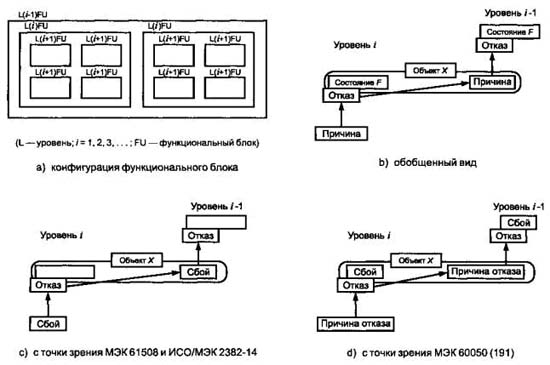
[ ГОСТ Р МЭК 61508-4-2007]Тематики
- газораспределение
- надежность средств электросвязи
- надежность, основные понятия
Обобщающие термины
EN
сброс
Разрывное нарушение, при котором сместитель падает в сторону опущенного крыла (висячее крыло опущено относительно лежачего).
[ Словарь геологических терминов и понятий. Томский Государственный Университет]Тематики
- геология, геофизика
Обобщающие термины
EN
сверхток
Любой ток, превышающий номинальный
МЭК 60050(441-11-06).
[ ГОСТ Р 50030. 1-2000 ( МЭК 60947-1-99)]
[ ГОСТ Р 50345-99( МЭК 60898-95)]
сверхток
Электрический ток, превышающий номинальный электрический ток.
Сверхток представляет собой любой электрический ток, величина которого превышает номинальный ток какого-либо элемента электроустановки здания или используемого в ней электрооборудования, например: номинальный ток электрической цепи, допустимый длительный ток проводника, номинальный ток автоматического выключателя и т. д. В нормативной и правовой документации различают два основных вида сверхтока – ток перегрузки и ток короткого замыкания.
Появление сверхтока в каком-либо элементе электроустановки здания может привести к его перегреву, возгоранию и, как следствие, к возникновению пожара в здании. Поэтому в электроустановках зданий выполняют защиту от сверхтока.
[ http://www.volt-m.ru/glossary/letter/%D1/view/59/]
сверхток
сверхток в электротехническом изделии
Ток, значение которого превосходит наибольшее рабочее значение тока электротехнического изделия (устройства).
[ ГОСТ 18311-80]
сверхток
Электрический ток, превышающий номинальный электрический ток.
Примечание - Для проводников номинальный ток считается равным длительному допустимому току.
[ ГОСТ Р МЭК 60050-826-2009]
Сверхток может оказывать или может не оказывать вредные воздействия в зависимости от его величины и продолжительности. Сверхтоки могут возникать в результате перегрузок в электроприемниках или при повреждениях, таких как короткие замыкания или замыканиях на землю
[ ГОСТ Р 50571. 1-2009 ( МЭК 60364-1: 2005)]
сверхток
Любой ток, превышающий номинальное значение. Для проводов номинальным значением является допустимый ток.
[ ГОСТ Р МЭК 60204-1-2007]EN
overcurrent
electric current exceeding the rated electric current
NOTE – For conductors, the rated current is considered as equal to the current-carrying capacity
[IEV number 826-11-14]
over-current
<>current exceeding the rated current
<>[IEC 61095, ed. 2.0 (2009-02)]
over-current
electric current the value of which exceeds a specified limiting value
[IEV number 151-15-28]
[IEV number 442-01-20]FR
surintensité, f
courant électrique supérieur au courant électrique assigné
NOTE – Pour des conducteurs, on considère que le courant assigné est égal au courant admissible.
[IEV number 826-11-14]
surintensité
courant supérieur au courant assigné
[IEC 61095, ed. 2.0 (2009-02)]
[IEV number 442-01-20]
surintensité, f
courant électrique dont la valeur dépasse une valeur limite spécifiée
[IEV number 151-15-28]Параллельные тексты EN-RU The design of LV installations leads to basic protection devices being fitted for three types of faults:
-
overloads
-
short-circuits
-
insulation faults
Низковольтные электроустановки должны быть оснащены устройствами защиты трех типов:
-
от перегрузки;
-
от короткого замыкания;
- от токов утечки.
[Перевод Интент]
Примечание.
Слово fault в данном случае пришлось опустить, поскольку:
- его нельзя перевести как "неисправность", т. к. возникновение перегрузки ( overload) не является неисправностью;
- его нельзя перевести как "сверхток", т. к. ток утечки не является сверхтоком.The chosen switchgear must withstand and eliminate faults at optimised cost with respect to the necessary performance.
[Schneider Electric]Выбранная аппаратура распределения должна иметь такие характеристики, чтобы рентабельно выдерживать и ограничивать сверхтоки.
[Перевод Интент]Тематики
Синонимы
EN
DE
FR
ток повреждения
Ток, возникающий в результате пробоя или перекрытия изоляции.
[ ГОСТ Р 51321. 1-2000 ( МЭК 60439-1-92)]
ток повреждения
Ток, который протекает через данную точку повреждения в результате повреждения изоляции.
[ ГОСТ Р МЭК 60050-826-2009]EN
fault current
current resulting from an insulation failure, the bridging of insulation or incorrect connection in an electrical circuit
[IEC 61439-1, ed. 2.0 (2011-08)]
fault current
current which flows across a given point of fault resulting from an insulation fault
[IEV number 826-11-11]FR
courant de défaut
courant résultant d'un défaut de l'isolation, du contournement de l’isolation ou d’un raccordement incorrect dans un circuit électrique
[IEC 61439-1, ed. 2.0 (2011-08)]
courant de défaut, m
courant s'écoulant en un point de défaut donné, consécutivement à un défaut de l'isolation
[IEV number 826-11-11]Тематики
EN
DE
- Fehlerstrom, m
FR
- courant de défaut, m
3.7.2 повреждение (fault): Повреждение любого элемента, разделения, изоляции или соединения между элементами, не являющимися по настоящему стандарту не повреждаемыми, от которых зависит искробезопасность цепи.
Источник: ГОСТ Р 52350.11-2005: Электрооборудование для взрывоопасных газовых сред. Часть 11. Искробезопасная электрическая цепь "I" оригинал документа
3.16 неисправность (fault): Состояние объекта, характеризующееся неспособностью исполнять требуемую функцию, исключая время профилактического технического обслуживания или других запланированных действий, или простои из-за недостатка внешних ресурсов
Примечание - Неисправность часто является результатом отказа объекта, но может существовать и без отказа.
Источник: ГОСТ Р 51901.6-2005: Менеджмент риска. Программа повышения надежности оригинал документа
3.6 неисправность (fault): Состояние элемента, характеризующееся неспособностью исполнять требуемую функцию, исключая период технического обслуживания, ремонта или других запланированных действий, а также из-за недостатка внешних ресурсов.
Примечание - Неисправность часто является результатом отказа элемента, но может существовать и без предшествующего отказа.
Источник: ГОСТ Р 51901.5-2005: Менеджмент риска. Руководство по применению методов анализа надежности оригинал документа
3.5 неисправность (fault): Состояние объекта, когда один из его элементов или группа элементов проявляют признаки деградации или нарушения работы, что может привести к отказу машины.
Примечания
1 Неисправность часто является следствием отказа, но может иметь место и при его отсутствии.
2 Состояние объекта не рассматривают как неисправное, если оно возникло вследствие запланированных процедур или нехватки внешних ресурсов.
Источник: ГОСТ Р ИСО 13379-2009: Контроль состояния и диагностика машин. Руководство по интерпретации данных и методам диагностирования оригинал документа
3.3 неисправность (fault): Состояние объекта, при котором он не способен выполнять требуемую функцию, за исключением такой неспособности при техническом обслуживании или других плановых мероприятиях или вследствие нехватки внешних ресурсов.
Примечания
1 Неисправность часто является следствием отказа объекта, но может иметь место и без него.
2 В настоящем стандарте термин «неисправность» используется наряду с термином «отказ» по историческим причинам.
Источник: ГОСТ Р 51901.12-2007: Менеджмент риска. Метод анализа видов и последствий отказов оригинал документа
3.1.30 ошибка (fault): Разность между погрешностью весоизмерительного датчика и основной погрешностью весоизмерительного датчика (см. 3.1.34).
Источник: ГОСТ Р 8.726-2010: Государственная система обеспечения единства измерений. Датчики весоизмерительные. Общие технические требования. Методы испытаний оригинал документа
3.6 дефект (fault): Неисправность или ошибка в компоненте технического обеспечения, программного обеспечения или системы
[МЭК 61513, пункт 3.22]
Примечание 1 - Дефекты могут подразделяться на случайные, например, в результате ухудшения аппаратных средств из-за старения, и систематические, например, ошибки в программном обеспечении, которые вытекают из погрешностей проектирования.
Примечание 2 - Дефект (в особенности дефект проекта) может остаться необнаруженным в системе до тех пор, пока не окажется, что полученный результат не соответствует намеченной функции, то есть возникает отказ.
Примечание 3 - См. также «ошибка программного обеспечения» и «случайный дефект».
Источник: ГОСТ Р МЭК 62340-2011: Атомные станции. Системы контроля и управления, важные для безопасности. Требования по предотвращению отказов по общей причине оригинал документа
3.2 неисправность (fault): Состояние объекта, когда один из его элементов или группа элементов проявляет признаки деградации или нарушения работы, что может привести к отказу машины.
Примечание - Неисправность может привести к отказу.
Источник: ГОСТ Р ИСО 17359-2009: Контроль состояния и диагностика машин. Общее руководство по организации контроля состояния и диагностирования оригинал документа
3.17 дефект (fault): Неисправность или ошибка в компоненте технического обеспечения, программного обеспечения или системы.
[МЭК 61513, пункт 3.22]
Источник: ГОСТ Р МЭК 60880-2010: Атомные электростанции. Системы контроля и управления, важные для безопасности. Программное обеспечение компьютерных систем, выполняющих функции категории А оригинал документа
3.6.1 сбой (fault): Ненормальный режим, который может вызвать уменьшение или потерю способности функционального блока выполнять требуемую функцию.
Примечание - МЭС 191-05-01 определяет «сбой» как состояние, характеризуемое неспособностью выполнить необходимую функцию, исключая неспособности, возникающие во время профилактического ухода или других плановых мероприятий, либо в результате недостатка внешних ресурсов. Иллюстрация к этим двум точкам зрения показана на рисунке 4 [ИСО/МЭК 2382-14-01-10].
Источник: ГОСТ Р МЭК 61508-4-2007: Функциональная безопасность систем электрических, электронных, программируемых электронных, связанных с безопасностью. Часть 4. Термины и определения оригинал документа
3.22 дефект (fault): Дефект в аппаратуре, программном обеспечении или в компоненте системы (см. рисунок 3).
Примечание 1 -Дефекты могут быть результатом случайных отказов, которые возникают, например, из-за деградации аппаратуры в результате старения; возможны систематические дефекты, например, в результате дефектов в программном обеспечении, возникающих из-за ошибок при проектировании.
Примечание 2 - Дефект (особенно дефекты, связанные с проектированием) может оставаться незамеченным, пока сохраняются условия, при которых он не отражается на выполнении функции, т.е. пока не произойдет отказ.
Примечание 3 - См. также «дефект программного обеспечения».
Источник: ГОСТ Р МЭК 61513-2011: Атомные станции. Системы контроля и управления, важные для безопасности. Общие требования оригинал документа
4.10.1 ошибка (fault): Разность между погрешностью показаний и погрешностью прибора.
Источник: ГОСТ Р ЕН 1434-1-2011: Теплосчетчики. Часть 1. Общие требования
Англо-русский словарь нормативно-технической терминологии > fault
-
18 algebraically
алгебраически algebraically best approximation ≈ алгебраически наилучшее приближение algebraically closed body ≈ алгебраически замкнутое тело algebraically closed expansion ≈ алгебраически замкнутое расширение algebraically closed extension ≈ алгебраически замкнутое расширение algebraically closed field ≈ алгебраически замкнутое поле algebraically closed group ≈ алгебраически замкнутая группа algebraically closed hull ≈ алгебраически замкнутая оболочка algebraically closed model ≈ алгебраически замкнутая модель algebraically closed subfield ≈ алгебраически замкнутое подполе algebraically compact group ≈ алгебраически компактная группа algebraically complete field ≈ алгебраически полное поле algebraically complete model ≈ алгебраически полная модель algebraically complete system ≈ алгебраически полная система algebraically connected functions ≈ алгебраически связанные функции algebraically definable function ≈ алгебраически определимая функция algebraically dependent functions ≈ алгебраически зависимые функции algebraically dependent numbers ≈ алгебраически зависимые числа algebraically dependent set ≈ алгебраически зависимое множество algebraically equivalent curves ≈ алгебраические эквивалентные кривые algebraically equivalent cycles ≈ алгебраически эквивалентные циклы algebraically independent numbers ≈ алгебраически независимые числа algebraically independent set ≈ алгебраически независимое множество algebraically irreducible representation ≈ алгебраически неприводимое представление algebraically irreducible semigroup ≈ алгебраически неприводимая полугруппа algebraically isomorphic structures ≈ алгебраически изоморфные структуры algebraically parallel space ≈ алгебраически параллельные пространства algebraically simple group ≈ алгебраически простая группа algebraically trivial mapping ≈ алгебраически тривиальное отображение - algebraically closed - algebraically compact - algebraically complete - algebraically connected - algebraically definable - algebraically dependent - algebraically determined - algebraically equivalent - algebraically independent - algebraically simple - algebraically solvable - algebraically trivialалгебраическим способом;
алгебраическиБольшой англо-русский и русско-английский словарь > algebraically
-
19 control
1) контроль
2) контрольный
3) обоснование
4) обосновывать
5) оперативный
6) регулировать
7) регулировочный орган
8) совладать
9) управление
10) управляемость
11) управляющий
12) штурвальный
13) регулировка
14) управлять
15) проверять
16) регулирование
17) инструкция
18) исполнительный
19) контролировать
20) проверка
21) проверочный
22) регулирующий
– absence of control
– air traffic control
– air-traffic control
– analysis is in control
– anticipatory control
– arc control device
– association control
– attenuation control
– attitude control
– automatic control
– autonomous control
– autothrottle control
– bang-bang control
– be in control
– be out of control
– bin control gate
– brightness control
– bucket tip control
– bulge control
– centralized control
– closed-cycle control
– complete control
– context control
– continuous control
– contrast control
– control accuracy
– control action
– control actuator
– control agent
– control air
– control algorithm
– control amplifier
– control and display
– control assembly
– control beam
– control bus
– control button
– control cabinet
– control cable
– control cam
– control center
– control channel
– control character
– control characteristic
– control circuit
– control code
– control column
– control combination
– control computer
– control crank
– control criterion
– control current
– control cylinder
– control data
– control desk
– control electrode
– control electronics
– control element
– control equipment
– control factor
– control flutter
– control force
– control function
– control gate
– control gear
– control graphitization
– control instruction
– control jet
– control joint
– control key
– control knob
– control lag
– control lever
– control limit
– control linkages
– control links
– control loop
– control magnet
– control means
– control mode
– control module
– control motor
– control of airplane
– control office
– control operation
– control panel
– control pedal
– control position
– control problem
– control pulse
– control range
– control reactor
– control register
– control relay
– control response
– control room
– control shaft
– control spin
– control statement
– control stick
– control surface
– control survey
– control switch
– control temperature
– control theory
– control track
– control transistor
– control unit
– control vector
– control voltage
– control weeds
– control winding
– control wiring
– corrosion control
– dash control
– data control
– derivative control
– digital control
– direct control
– distance control
– disturbance-compensating control
– dive-recovery control
– duplicate control
– dust control
– ease of control
– elevator control
– emergency control
– end-point control
– engine control
– environment control
– error control
– error-closing control
– exclusive control
– extension of control
– feed control
– feed-back control
– feedback control
– filament control
– fine control
– fire control
– flight control
– floating control
– flood control
– flow-rate control
– focus control
– frequency control
– front-panel control
– gain control
– ganged control
– geodetic control
– go out of control
– ground control
– gyrorudder control
– hand control
– headwater control
– height control
– hierarchical control
– in-process control
– independent control
– indirect control
– industrial control
– input-output control
– integral control
– interacting control
– intermittent control
– inventory control
– jet control
– job control language
– layout of control
– leather control
– level control
– linearity control
– load control
– local control
– lose control
– loss of control
– manual control
– master control
– meduim-access control
– meduim-access control
– mission control
– multicircuit control
– noise control
– numerical control
– off-line control
– on-line control
– on-off control
– open-loop control
– operating control
– optimal control
– optimization control
– out of control
– pass control
– path control
– path of control
– pedal control
– pest control
– phase control
– phase-lock control
– piano-key control
– plan control
– point of control
– point-to-point control
– power-assisted control
– product control
– program control
– programmed control
– proportional control
– proportional-plus-floating control
– push-button control
– pushbutton control
– quality control
– radio control
– ramp control
– reaction control
– recovery control
– regain control
– register control
– remotability of control
– remote control
– roll control
– rudder control
– run-off control
– sampled-data control
– segregate control
– selectivity control
– self-acting control
– sensitivity control
– servo control
– slide control
– slope control
– statistical control
– steering control
– supervisory control
– take control
– technical control
– temperature control
– throttle control
– tone control
– touch control
– traffic control
– tuning control
– vertical control
– vibration control
– voice-activated control
– volume control
aerodynamic control surface — руль управления аэродинамический
automatic control equipment — аппаратура автоматического управления
automatic frequency control — частотная АПЧ, автоматическая настройка частоты
automatic gain control — <tech.> регулировка усиления автоматическая
automatic remote control — <comput.> телеавтоматика
automatic voltage control — регулирование напряжения автоматическое
bang-bang control system — <comput.> система управления релейная
cancelling control button — < railways> кнопка отмены
centralized traffic control — < railways> централизация
conditional transfer of control — условная передача управления
control aisle of a substation — коридор управления подстанции
control in pitch of airplane — продольное управление самолетом
control point adjustment — настройка точки регулирования, <engin.> задатчик
control tower service — <aeron.> служба диспетчерская
coordinated phosphate control — коррекционная обработка воды
differential control method — дифференцированный метод контроля
dispatcher's supervisory control — телеуправление диспетчерское
fire control computer — счетно-решающее устройство для управления артиллерийским огнем
fire control director — прибор управления артиллерийским огнем
floating control mode — <comput.> способ регулирования астатический
intermittent gain control — < radio> регулировка усиления временная
lateral control of airplane — поперечное управление самолетом
microprocessor control system — микропроцессорная система управления
pressure control instrument — <tech.> маностат
proportional control factor — <comput.> коэффициент пропорционального регулирования
range finder control — <geod.> метод дальномерно-базисный
reactor control system — <engin.> система управления и защиты
remote control interlocking — < railways> телецентрализация, централизация дистанционная
river control structure — <geol.> сооружение выправительное
servo control unit — <engin.> гидроусилитель
spray-type superheat control — впрысковое регулирование перегрева
supervisory control system — <comput.> автодиспетчер
thermostatic temperature control — ключевое термостатирование
volume range control — регулирование динамического диапазона
-
20 isolation
- разъединение (функция)
- развязка (цепей)
- развязка
- отсоединение
- обесточивание
- локализация дефектов
- изолирование
- выделение сигнала
- атомарность, непротиворечивость, изолированность, долговечность
атомарность, непротиворечивость, изолированность, долговечность
Свойства, присущие транзакции.
атомарность
Свойство атомарности (atomicity) обозначает, что входящие в транзакцию операции выступают вместе как неделимая единица работы, т.е. либо все операции успешно завершаются, либо отменяются. Это делает возможным гарантировать непротиворечивость.
непротиворечивость
Непротиворечивость (consistency) системы: с точки зрения стороннего наблюдателя, система находится в непротиворечивом состоянии и до начала, и после завершения транзакции.
изолированность
Свойство изолированность (isolation) распространяет непротиворечивость и на период течения транзакции, т.е. в ходе выполнения одна транзакция "не видит" изменений, сделанных другими незавершенными транзакциями.
долговечность
Долговечность (durability) обозначает сохранность изменений, совершенных транзакцией, независимо от сбоев на нижних уровнях, как то внезапная перезагрузка, поломка оборудования.
[ http://www.morepc.ru/dict/]Тематики
EN
выделение сигнала
разделение (сигналов)
—
[Я.Н.Лугинский, М.С.Фези-Жилинская, Ю.С.Кабиров. Англо-русский словарь по электротехнике и электроэнергетике, Москва, 1999 г.]Тематики
- электротехника, основные понятия
EN
изолирование
—
[Я.Н.Лугинский, М.С.Фези-Жилинская, Ю.С.Кабиров. Англо-русский словарь по электротехнике и электроэнергетике, Москва, 1999 г.]Тематики
- электротехника, основные понятия
EN
локализация дефектов
локализация неисправностей
—
[А.С.Гольдберг. Англо-русский энергетический словарь. 2006 г.]Тематики
Синонимы
EN
15.1.12. Доступ к движущимся частям машины допускается после полной остановки, обесточивания электрооборудования и принятия всех мер против пуска ее посторонними лицами.
[ПБ 09-595-03]7.2.4.1 Включающая и отключающая способности
Контактор или пускатель должен быть способен безотказно включать и отключать токи в условиях, указанных в таблице 7, в зависимости от требуемой категории применения и предписанного числа срабатываний по 8.3.3.5.
Не допускаются превышения времени обесточивания и протекания тока, приведенные в таблицах 7 и 7а.
Время обесточивания с согласия изготовителя можно сокращать.
[ ГОСТ Р 50030.4.1-2002 (МЭК 60947-4-1-2000)]412.2.4 Если необходимо снять ограждение или вскрыть оболочку или ее части, это может быть сделано только:
- с помощью ключа или специального инструмента или
- после обесточивания токоведущих частей, защищенных этими ограждениями или оболочками, или
- если поставлены промежуточные барьеры, обеспечивающие степень защиты по крайней мере 1Р2Х и которые могут быть сняты также только при применении специального ключа или инструмента.
[ ГОСТ Р 50571. 3-94 ( МЭК 364-4-41-92)]
Тематики
EN
развязка
—
[ http://www.iks-media.ru/glossary/index.html?glossid=2400324]Тематики
- электросвязь, основные понятия
EN
развязка (цепей)
—
[Я.Н.Лугинский, М.С.Фези-Жилинская, Ю.С.Кабиров. Англо-русский словарь по электротехнике и электроэнергетике, Москва, 1999 г.]Тематики
- электротехника, основные понятия
EN
разъединение (функция)
Действие, направленное на отключение питания всей установки или ее отдельной части путем отделения этой установки или части ее от любого источника электрической энергии по соображениям безопасности.
[ ГОСТ Р 50030. 1-2000 ( МЭК 60947-1-99)]
разъединение
Действие, предназначенное для отключения в целях безопасности питания всей электрической установки или ее части при помощи отделения ее от всех источников электрической энергии.
[ ГОСТ Р МЭК 60050-826-2009]
Функция разъединения состоит в том, чтобы обеспечить безопасность персонала перед выполнением работы, ремонта, определения места повреждения или замены оборудования
[ ГОСТ Р 50571. 1-2009 ( МЭК 60364-1: 2005)]EN
isolation
function intended to make dead for reasons of safety all or a discrete section of the electrical installation by separating the electrical installation or section from every source of electric energy
[IEV number 826-17-01]FR
sectionnement, m
Параллельные тексты EN-RU
fonction destinée à assurer la mise hors tension de tout ou partie d'une installation électrique en séparant l'installation électrique ou une partie de l'installation électrique, de toute source d'énergie électrique, pour des raisons de sécurité
[IEV number 826-17-01]Compact CVS circuit breakers are suitable for Isolation as defined in EC standards 60947-2. The aim of isolation is to separate a circuit or apparatus from the remainder of a system which is energized in order the personnel may carry out work on the isolated part with complete safety.
[Schneider Electric]Автоматический выключатель CVS пригоден к разъединению - функции, определенной в европейском стандарте 60947-2. Целью разъединения является отделение цепей или аппаратов от части системы, остающейся под напряжением для обеспечения полной безопасности персонала, работающего на отделенной части системы.
[Перевод Интент]When the supply disconnecting device is one of the types specified in 5.3.2 a) to d) it shall fulfil all of the following requirements:
– have a visible contact gap or a position indicator which cannot indicate OFF (isolated) until all contacts are actually open and the requirements for the isolating function have been satisfied;
...
[IEC 60204-1-2006]Аппараты отключения электропитания, указанные в п. 5.3.2, в перечислениях а)...d), должны удовлетворять всем перечисленным ниже требованиям:
- иметь видимый изоляционный промежуток между разомкнутыми контактами или указатель коммутационного положения, который указывает на положение ОТКЛЮЧЕНО (отделено) только в том случае, если все контакты аппарата разомкнуты и все остальные требования, относящиеся к функции разъединения, выполнены;
...
[Перевод Интент]Тематики
- выключатель автоматический
- выключатель, переключатель
- электробезопасность
- электроустановки
Близкие понятия
Синонимы
EN
DE
- Trennen, n
FR
- sectionnement, m
3.2.15. отсоединение (isolation):
Операция, предназначенная для обесточивания всей установки или отдельных ее частей для обеспечения безопасности путем отсоединения от всех источников электроэнергии.
(МЭС 826-08-01, MOD).
Примечание - Отсоединяемые части должны быть заземлены в соответствии с 16.4.
Источник: ГОСТ Р МЭК 60519-1-2005: Безопасность электротермического оборудования. Часть 1. Общие требования оригинал документа
Англо-русский словарь нормативно-технической терминологии > isolation
См. также в других словарях:
Iterated function system — In mathematics, iterated function systems or IFSs are a method of constructing fractals; the resulting constructions are always self similar.IFS fractals as they are normally called can be of any number of dimensions, but are commonly computed… … Wikipedia
System analysis — See also systems analysis. : MISO redirects here, for the data line see Serial Peripheral Interface Bus. System analysis is the branch of electrical engineering that characterizes electrical systems and their properties. Although many of the… … Wikipedia
Complete androgen insensitivity syndrome — Classification and external resources AIS results when the function of the androgen receptor (AR) is impaired. The AR protein (pictured) mediates the effects of androgens in the human body. ICD 10 … Wikipedia
System Architecture Evolution — (aka SAE) is the core network architecture of 3GPP s LTE wireless communication standard. SAE is the evolution of the GPRS Core Network, with some differences: simplified architecture all IP Network (AIPN) support for higher throughput and lower… … Wikipedia
System Shock 2 — Developer(s) Irrational Games Looking Glass Studios Publisher(s) Electronic Arts … Wikipedia
System — Sys tem, n. [L. systema, Gr. ?, fr. ? to place together; sy n with + ? to place: cf. F. syst[ e]me. See {Stand}.] 1. An assemblage of objects arranged in regular subordination, or after some distinct method, usually logical or scientific; a… … The Collaborative International Dictionary of English
System — (from Latin systēma , in turn from Greek polytonic|σύστημα systēma) is a set of interacting or interdependent entities, real or abstract, forming an integrated whole. The concept of an integrated whole can also be stated in terms of a system… … Wikipedia
Complete lattice — In mathematics, a complete lattice is a partially ordered set in which all subsets have both a supremum (join) and an infimum (meet). Complete lattices appear in many applications in mathematics and computer science. Being a special instance of… … Wikipedia
Complete partial order — In mathematics, directed complete partial orders and ω complete partial orders (abbreviated to dcpo, ωcpo or sometimes just cpo) are special classes of partially ordered sets, characterized by particular completeness properties. Complete partial… … Wikipedia
Complete theory — In mathematical logic, a theory is complete if it is a maximal consistent set of sentences, i.e., if it is consistent, and none of its proper extensions is consistent. For theories in logics which contain classical propositional logic, this is… … Wikipedia
Function point — A function point is a unit of measurement to express the amount of business functionality an information system provides to a user. Function points are the units of measure used by the IFPUG Functional Size Measurement Method. The IFPUG FSM… … Wikipedia
